In London I could show you a lumberyard built over a plague pit. They threw bodies in all through the summer of ’65 until they lost count of the dead.
The ghosts of America are limited to the lifespan of whatever local can remember that this apartment complex was once an orchard full of pheasants, or that this bank was once a funeral home was once a hamburger restaurant, was once an Indian burial mound. No one remembers and no one listens anyway if it interferes with a real estate deal and making a buck.
There’s a section of wall that Charles Dickens’ father stared at when the alley was part of Southwark debtor’s prison, and there’s a corner in the Old Cheddar Cheese pub off Fleet Street where Dickens the son sat staring at the fire, just around the corner from the house where Dr. Johnson wrote the famous dictionary, and a stuffed parrot in that pub once held renown as the greatest master of profanity in all the British Empire, including Poona and Rangoon.
John D. MacDonald said once that a Florida conservationist is someone who bought their waterfront property LAST week. A few years ago, Disney had to be talked out of building a theme park next to the Fredericksburg battleground where Joshua Lawrence Chamberlain covered himself with the dead to guard against snipers and had to listen all night to the hogs tearing at the dead and the wounded. That was before Gettysburg and the Battle of Little Round Top, when he and the 20th Maine saved the whole sorry country for the makers of theme parks and the real estate mavens.
A volunteer for ACORN (they lobby for housing for the poor) told me that their greatest enemies lurked in the United Way, which is often controlled by local real estate interests. I wonder what part memory will play in the rebuilding, I mean systematic looting, of drowned New Orleans? It's not just the poor that are being dispossessed. A good many people in the middle class are learning the hard way about the Invisible Hand of the marketplace: who it favors and who it bitch slaps, despite the pretty words of the civic boosters.
See Also: Eminent Domain and the Supreme Court, et al
"All the Stones the Builders Rejected"  (And some days it takes more Stones than others...) Where Mythical Bestiary meets Contemporary Culture and Chews On Its Leg Until Covered with Slobber.
Showing posts with label John D. MacDonald. Show all posts
Showing posts with label John D. MacDonald. Show all posts

The Commonplace Book-- Excerpts from my reading in June
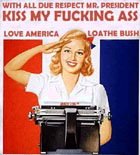
capitalism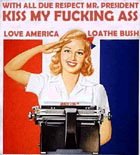
“... We're recasting the Bizarros as a frightening, unstoppable zombie-plague style menace. The Bizarros are a lot more predatory in All-Star and their touch is infectious. It's a 'zombie apocalypse' approach to the Bizarro concept and the idea of an unstoppable plague of backwards-talking idiocy sweeping across the globe seems ironically amusing right now.”
-- Grant Morrison on writing All-Star Superman
***
It's like, "Hey, ever heard of a little thing called 'resolving issues through unconscious acting-out of a maladaptive fantasy-life manifesting itself through inappropriately weak personal boundaries'?" Hello? -- “Becky OFlanahan” interview for The Onion
***
“This book augments the portrait of Mr. Bush as an incurious and curiously uninformed executive that Mr. Suskind earlier set out in "The Price of Loyalty" and in a series of magazine articles on the president and key aides. In "The One Percent Doctrine," he writes that Mr. Cheney's nickname inside the C.I.A. was Edgar (as in Edgar Bergen), casting Mr. Bush in the puppet role of Charlie McCarthy, and cites one instance after another in which the president was not fully briefed (or had failed to read the basic paperwork) about a crucial situation.”
---book review for THE ONE PERCENT DOCTRINE by Ron Suskind in The NYT 6/20/06
“During a November 2001 session with the president, Mr. Suskind recounts, a C.I.A. briefer realized that the Pentagon had not told Mr. Bush of the C.I.A.'s urgent concern that Osama bin Laden might escape from the Tora Bora area of Afghanistan (as he indeed later did) if United States reinforcements were not promptly sent in. And several months later, he says, attendees at a meeting between Mr. Bush and the Saudis discovered after the fact that an important packet laying out the Saudis' views about the Israeli-Palestinian situation had been diverted to the vice president's office and never reached the president.
Keeping information away from the president, Mr. Suskind argues, was a calculated White House strategy that gave Mr. Bush "plausible deniability" from Mr. Cheney's point of view, and that perfectly meshed with the commander in chief's own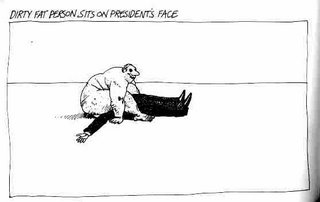 impatience with policy details. Suggesting that Mr. Bush deliberately did not read the full National Intelligence Estimate on Iraq, which was delivered to the White House in the fall of 2002, Mr. Suskind writes: "Keeping certain knowledge from Bush — much of it shrouded, as well, by classification — meant that the president, whose each word circles the globe, could advance various strategies by saying whatever was needed. He could essentially be 'deniable' about his own statements."
"Whether Cheney's innovations were tailored to match Bush's inclinations, or vice versa, is almost immaterial," Mr. Suskind continues. "It was a firm fit. Under this strategic model, reading the entire N.I.E. would be problematic for Bush: it could hem in the president's rhetoric, a key weapon in the march to war. He would know too much."
***
“After all, there’s a reason they call it the mass market. It’s massive. It’s fat, it’s big, and it’s dumb as a post.”
“The Direct Market is about as hale and hearty as a beached whale, and Marvel Comics has spent the last few years muttering to itself and pushing around a shopping cart. So failing to look for new readers and new venues would be eight kinds of stupid. We gotta shop around.”
-- Frank Miller, speaking at the Harvey Kurtzman awards
***
***
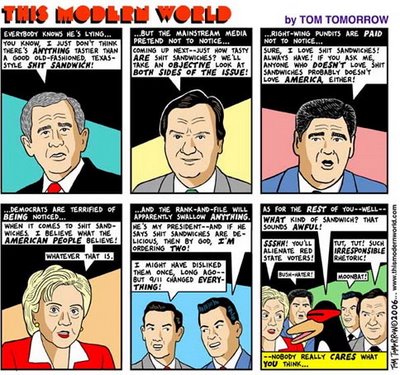
• "These self-obsessed women seem genuinely unaware that 9-11 was an attack on our nation and acted like as if the terrorist attack only happened to them. They believe the entire country was required to marinate in their exquisite personal agony. Apparently, denouncing bush was part of the closure process. These broads are millionaires, lionized on TV and in articles about them, reveling in their status as celebrities and stalked by griefparrazies. I have never seen people enjoying their husband’s death so much." --Ann Coulter
• "We have been slandered. Contrary to Ms. Coulter’s statements, there was no joy in watching men that we loved burn alive. There was no happiness in telling our children that their fathers were never coming home again. We adored these men and miss them every day," -- Kristen Breitweiser, Lorie Van Auken, Mindy Kleinberg and Patty Casazza of New Jersey
***
“I got in a lot of trouble a few weeks ago for being disrespectful toward Ana Marie Cox. I have no intention of being disrespectful now. I think it's just terrific that she's become a full fledged member of the mainstream media and is covering bloggers as if they are pod people from mars. It's the smart career move. Still, it's quite a transition since for several years she represented the liberal blogosphere on countless blogging panels and media appearances. It's a testament to her faking skills that she could convincingly be a blogging pioneer one minute and a befuddled mainstream journalist the next. It's trailblazing, actually.”
-- digby on the shark-jumping Wonkette
***
“Favorite complain about contemporary world: the facetiousness of ‘respectable’ people... who, because not taking anyting seriously, are destroying old human feelings older than TIME magazine... Dave Garroways laughing at white doves.”
-- Jack Kerouac, in the introduction to “Lonesome Traveler’
***
“For there is something new in the Reign of Terror, and that is its absolutism. You couldn’t escape it. In the old regime, if you were determined to stay out of politics, politics could stay out of you. In revolutionary France, the modern development was that you could not withdraw, or go into self-exile—you could not even repent or adopt the other religion. You could only wait and hope not to die. When the Abbé Sieyès, asked what he had done during the Terror, answered, “I lived,” he was making more than a mordant joke; he was identifying the new thing that had come into the world, which was a will to killing that made merely living achievement enough.
“The bloodlust of the time makes the attempt to trace the Terror to any single intellectual source, or peculiar circumstance—to Enlightenment rationalism gone mad, or to the paranoia of the encircled Republicans—feel inadequate to the Terror’s essential nature, which was that it didn’t matter what the ideology was. The argument that a taste for the ideal and the tabula rasa leads to terror, after all, would be more convincing if its opposite—a desire for an organic, authentic, traditional society—didn’t lead to terror, too. The Red Terror led to a White Terror; Robespierre’s head had hardly fallen before the Gilded Youth were attacking the now helpless Jacobins. It sometimes seems as if history had deliberately placed Hitler and Stalin side by side at the climax of the horror of modern history simply to demonstrate that the road to Hell is paved with any intention you like; a planned, pseudo-rationalist utopianism and an organic, racial, backward-looking Romanticism ended up with the same camps and the same carnage. The historical lesson of the first Terror is not that reason devours its own but that reason cannot stop us from devouring each other.”
-- Adam Gopnik, HEADLESS HORSEMAN
The Reign of Terror Revisited The New Yorker, 6/5/06
***
"How can one wonder at any number of strange assertions from men whose whole lives were devoted to mockery, and who were ready at any time to sacrifice the reputation of their superiors to vulgar envy and spite, as to some evil genius."
-- Pericles
(quotation included in a birthday letter written to Eleanor Roosevelt by Harry Truman)
***
“You’ve got some kind of adolescent infatuation with the idea of gallantry and fair play,” she said. “He was doing what he thought was right. Damn you, why have you got me defending him? Would you leave? Please?”
-- from THE EMPTY COPPER SEA by John D. MacDonald
***
Students will contrast and compare the following excerpts from THE ONE PERCENT DOCTRINEby Ron Suskind with THE EMPTY COPPER SEA by John D. MacDonald:
I. (From Suskind): “As for Mr. Tenet, this book provides a nuanced portrait of a man with "colliding loyalties — to the president, who could have fired him after 9/11 but didn't; and to his analysts, whom he was institutionally and emotionally committed to defend." It would become an increasingly untenable position, as the White House grew more and more impatient with the C.I.A.'s reluctance to supply readily the sort of intelligence it wanted. ...While many C.I.A. analysts were deeply skeptical of the imminent danger posed by Mr. Hussein and simultaneously worried about the fallout of a possible invasion, the C.I.A., paradoxically enough, would become a favorite scapegoat for the administration's decision to go to war against Iraq, thanks in no small measure to Mr. Tenet's remark (quoted in Bob Woodward's 2004 book "Plan of Attack") that the existence of Iraqi weapons of mass destruction was a "slam dunk." ...He depicts the former C.I.A. director as frequently being made by the White House "to take the fall" for his superiors, on matters including the administration's handling of prewar intelligence to the 16 disputed words in the president's State of the Union address, regarding Iraq's supposed efforts to obtain uranium from Africa. Because it was Mr. Tenet "who brought analysis up the chain from the C.I.A.," Mr. Suskind writes, he "was best positioned to assume blame. And Rice was adept at laying it on Tenet."
At the same time, Mr. Suskind suggests that Mr. Tenet acted as a kind of White House enabler: he writes that in the wake of 9/11, Mr. Tenet felt a "mix of insecurity and gratitude" vis-à-vis George W. Bush, and that eager to please his boss, he repeatedly pushed C.I.A. staff members to come up with evidence that might support the president's public statements.
In the days after 9/11 Mr. Bush defended the embattled C.I.A. chief to angry congressmen, and at that point, Mr. Suskind writes: "George Tenet would do anything his President asked. Anything. And George W. Bush knew it."
II. (From MacDonald): “It’s hard to find very much about Van from Van. As a young man he was a notorious drunk. He broke places up and was thrown in jail dozens of times. You knew him in Lauderdale after he’d sobered up and became a respectable citizen. A reputation hangs on. For example, when he lost his shrimp boat, there was talk around Timber Bay that he’d been at the helm, drunk, when it happened. When Hub hired him at Hula Marine, people said Hub would live to regret it. Hub Lawless enjoyed hiring... misfits. I think he enjoyed gratitude.”
“Then it was pretty damn cruel to feed Van a mickey.”
“It was wicked the way the word is used in the Bible.”
***
“Whatever academic scholarship may insist, surely a sense of proportion is the last thing we want from history—perspective, certainly, but not proportion. Anything, after all, can be seen in proportion, shown to be no worse a crime than some other thing. Time and distance can’t help but give us a sense of proportion: it was long ago and far away and so what? What the great historians give us, instead, is a renewed sense of sorrow and anger and pity for history’s victims—for some luckless middle-aged Frenchman standing in the cold gray, shivering as he watches the members of his family being tied up and having their heads cut off. Read Gibbon on the destruction of the Alexandria library by the Christians, or E. P. Thompson on the Luddites—not to mention Robert Conquest on the Gulag—and suddenly old murders matter again; the glory of the work of these historians is that the right of the dead to have their pain and suffering taken seriously is being honored. It is not for history to supply us with a sense of history. Life always supplies us with a sense of history. It is for history to supply us with a sense of life.”
-- Adam Gopnik, HEADLESS HORSEMAN
The Reign of Terror Revisited The New Yorker, 6/5/06
***
"Damn, girl, this goes way past kink; you're in love."
-- Bob Vickery
“... We're recasting the Bizarros as a frightening, unstoppable zombie-plague style menace. The Bizarros are a lot more predatory in All-Star and their touch is infectious. It's a 'zombie apocalypse' approach to the Bizarro concept and the idea of an unstoppable plague of backwards-talking idiocy sweeping across the globe seems ironically amusing right now.”
-- Grant Morrison on writing All-Star Superman
***
It's like, "Hey, ever heard of a little thing called 'resolving issues through unconscious acting-out of a maladaptive fantasy-life manifesting itself through inappropriately weak personal boundaries'?" Hello? -- “Becky OFlanahan” interview for The Onion
***
“This book augments the portrait of Mr. Bush as an incurious and curiously uninformed executive that Mr. Suskind earlier set out in "The Price of Loyalty" and in a series of magazine articles on the president and key aides. In "The One Percent Doctrine," he writes that Mr. Cheney's nickname inside the C.I.A. was Edgar (as in Edgar Bergen), casting Mr. Bush in the puppet role of Charlie McCarthy, and cites one instance after another in which the president was not fully briefed (or had failed to read the basic paperwork) about a crucial situation.”
---book review for THE ONE PERCENT DOCTRINE by Ron Suskind in The NYT 6/20/06
“During a November 2001 session with the president, Mr. Suskind recounts, a C.I.A. briefer realized that the Pentagon had not told Mr. Bush of the C.I.A.'s urgent concern that Osama bin Laden might escape from the Tora Bora area of Afghanistan (as he indeed later did) if United States reinforcements were not promptly sent in. And several months later, he says, attendees at a meeting between Mr. Bush and the Saudis discovered after the fact that an important packet laying out the Saudis' views about the Israeli-Palestinian situation had been diverted to the vice president's office and never reached the president.
Keeping information away from the president, Mr. Suskind argues, was a calculated White House strategy that gave Mr. Bush "plausible deniability" from Mr. Cheney's point of view, and that perfectly meshed with the commander in chief's own
 impatience with policy details. Suggesting that Mr. Bush deliberately did not read the full National Intelligence Estimate on Iraq, which was delivered to the White House in the fall of 2002, Mr. Suskind writes: "Keeping certain knowledge from Bush — much of it shrouded, as well, by classification — meant that the president, whose each word circles the globe, could advance various strategies by saying whatever was needed. He could essentially be 'deniable' about his own statements."
"Whether Cheney's innovations were tailored to match Bush's inclinations, or vice versa, is almost immaterial," Mr. Suskind continues. "It was a firm fit. Under this strategic model, reading the entire N.I.E. would be problematic for Bush: it could hem in the president's rhetoric, a key weapon in the march to war. He would know too much."
***
“After all, there’s a reason they call it the mass market. It’s massive. It’s fat, it’s big, and it’s dumb as a post.”
“The Direct Market is about as hale and hearty as a beached whale, and Marvel Comics has spent the last few years muttering to itself and pushing around a shopping cart. So failing to look for new readers and new venues would be eight kinds of stupid. We gotta shop around.”
-- Frank Miller, speaking at the Harvey Kurtzman awards
***

***
• "These self-obsessed women seem genuinely unaware that 9-11 was an attack on our nation and acted like as if the terrorist attack only happened to them. They believe the entire country was required to marinate in their exquisite personal agony. Apparently, denouncing bush was part of the closure process. These broads are millionaires, lionized on TV and in articles about them, reveling in their status as celebrities and stalked by griefparrazies. I have never seen people enjoying their husband’s death so much." --Ann Coulter
• "We have been slandered. Contrary to Ms. Coulter’s statements, there was no joy in watching men that we loved burn alive. There was no happiness in telling our children that their fathers were never coming home again. We adored these men and miss them every day," -- Kristen Breitweiser, Lorie Van Auken, Mindy Kleinberg and Patty Casazza of New Jersey
***
“I got in a lot of trouble a few weeks ago for being disrespectful toward Ana Marie Cox. I have no intention of being disrespectful now. I think it's just terrific that she's become a full fledged member of the mainstream media and is covering bloggers as if they are pod people from mars. It's the smart career move. Still, it's quite a transition since for several years she represented the liberal blogosphere on countless blogging panels and media appearances. It's a testament to her faking skills that she could convincingly be a blogging pioneer one minute and a befuddled mainstream journalist the next. It's trailblazing, actually.”
-- digby on the shark-jumping Wonkette
***
“Favorite complain about contemporary world: the facetiousness of ‘respectable’ people... who, because not taking anyting seriously, are destroying old human feelings older than TIME magazine... Dave Garroways laughing at white doves.”
-- Jack Kerouac, in the introduction to “Lonesome Traveler’
***
“For there is something new in the Reign of Terror, and that is its absolutism. You couldn’t escape it. In the old regime, if you were determined to stay out of politics, politics could stay out of you. In revolutionary France, the modern development was that you could not withdraw, or go into self-exile—you could not even repent or adopt the other religion. You could only wait and hope not to die. When the Abbé Sieyès, asked what he had done during the Terror, answered, “I lived,” he was making more than a mordant joke; he was identifying the new thing that had come into the world, which was a will to killing that made merely living achievement enough.
“The bloodlust of the time makes the attempt to trace the Terror to any single intellectual source, or peculiar circumstance—to Enlightenment rationalism gone mad, or to the paranoia of the encircled Republicans—feel inadequate to the Terror’s essential nature, which was that it didn’t matter what the ideology was. The argument that a taste for the ideal and the tabula rasa leads to terror, after all, would be more convincing if its opposite—a desire for an organic, authentic, traditional society—didn’t lead to terror, too. The Red Terror led to a White Terror; Robespierre’s head had hardly fallen before the Gilded Youth were attacking the now helpless Jacobins. It sometimes seems as if history had deliberately placed Hitler and Stalin side by side at the climax of the horror of modern history simply to demonstrate that the road to Hell is paved with any intention you like; a planned, pseudo-rationalist utopianism and an organic, racial, backward-looking Romanticism ended up with the same camps and the same carnage. The historical lesson of the first Terror is not that reason devours its own but that reason cannot stop us from devouring each other.”
-- Adam Gopnik, HEADLESS HORSEMAN
The Reign of Terror Revisited The New Yorker, 6/5/06
***
"How can one wonder at any number of strange assertions from men whose whole lives were devoted to mockery, and who were ready at any time to sacrifice the reputation of their superiors to vulgar envy and spite, as to some evil genius."
-- Pericles
(quotation included in a birthday letter written to Eleanor Roosevelt by Harry Truman)
***
“You’ve got some kind of adolescent infatuation with the idea of gallantry and fair play,” she said. “He was doing what he thought was right. Damn you, why have you got me defending him? Would you leave? Please?”
-- from THE EMPTY COPPER SEA by John D. MacDonald
***
Students will contrast and compare the following excerpts from THE ONE PERCENT DOCTRINEby Ron Suskind with THE EMPTY COPPER SEA by John D. MacDonald:
I. (From Suskind): “As for Mr. Tenet, this book provides a nuanced portrait of a man with "colliding loyalties — to the president, who could have fired him after 9/11 but didn't; and to his analysts, whom he was institutionally and emotionally committed to defend." It would become an increasingly untenable position, as the White House grew more and more impatient with the C.I.A.'s reluctance to supply readily the sort of intelligence it wanted. ...While many C.I.A. analysts were deeply skeptical of the imminent danger posed by Mr. Hussein and simultaneously worried about the fallout of a possible invasion, the C.I.A., paradoxically enough, would become a favorite scapegoat for the administration's decision to go to war against Iraq, thanks in no small measure to Mr. Tenet's remark (quoted in Bob Woodward's 2004 book "Plan of Attack") that the existence of Iraqi weapons of mass destruction was a "slam dunk." ...He depicts the former C.I.A. director as frequently being made by the White House "to take the fall" for his superiors, on matters including the administration's handling of prewar intelligence to the 16 disputed words in the president's State of the Union address, regarding Iraq's supposed efforts to obtain uranium from Africa. Because it was Mr. Tenet "who brought analysis up the chain from the C.I.A.," Mr. Suskind writes, he "was best positioned to assume blame. And Rice was adept at laying it on Tenet."
At the same time, Mr. Suskind suggests that Mr. Tenet acted as a kind of White House enabler: he writes that in the wake of 9/11, Mr. Tenet felt a "mix of insecurity and gratitude" vis-à-vis George W. Bush, and that eager to please his boss, he repeatedly pushed C.I.A. staff members to come up with evidence that might support the president's public statements.
In the days after 9/11 Mr. Bush defended the embattled C.I.A. chief to angry congressmen, and at that point, Mr. Suskind writes: "George Tenet would do anything his President asked. Anything. And George W. Bush knew it."
II. (From MacDonald): “It’s hard to find very much about Van from Van. As a young man he was a notorious drunk. He broke places up and was thrown in jail dozens of times. You knew him in Lauderdale after he’d sobered up and became a respectable citizen. A reputation hangs on. For example, when he lost his shrimp boat, there was talk around Timber Bay that he’d been at the helm, drunk, when it happened. When Hub hired him at Hula Marine, people said Hub would live to regret it. Hub Lawless enjoyed hiring... misfits. I think he enjoyed gratitude.”
“Then it was pretty damn cruel to feed Van a mickey.”
“It was wicked the way the word is used in the Bible.”
***
“Whatever academic scholarship may insist, surely a sense of proportion is the last thing we want from history—perspective, certainly, but not proportion. Anything, after all, can be seen in proportion, shown to be no worse a crime than some other thing. Time and distance can’t help but give us a sense of proportion: it was long ago and far away and so what? What the great historians give us, instead, is a renewed sense of sorrow and anger and pity for history’s victims—for some luckless middle-aged Frenchman standing in the cold gray, shivering as he watches the members of his family being tied up and having their heads cut off. Read Gibbon on the destruction of the Alexandria library by the Christians, or E. P. Thompson on the Luddites—not to mention Robert Conquest on the Gulag—and suddenly old murders matter again; the glory of the work of these historians is that the right of the dead to have their pain and suffering taken seriously is being honored. It is not for history to supply us with a sense of history. Life always supplies us with a sense of history. It is for history to supply us with a sense of life.”
-- Adam Gopnik, HEADLESS HORSEMAN
The Reign of Terror Revisited The New Yorker, 6/5/06
***
"Damn, girl, this goes way past kink; you're in love."
-- Bob Vickery
COMMONPLACE BOOK, EXCERPTS for DECEMBER 2005
Solace for the Magpie Mind.
[A "Commonplace Book" is a collection of random quotations, favorite authors, conversations, clippings, or scribbles on a bathroom wall. Entries are not considered a Rorschach test. Additions will be woven into the main body, with initials to credit the contributor.]
****
****
I know just enough about myself to know I cannot settle for one of those simplifications which indignant people seize upon to make understandable a world too complex for their comprehension. Astrology, health food, flag waving, bible thumping, Zen, nudism, nihilism -- all of these are grotesque simplifications which small dreary people adopt in the hope of thereby finding The Answer, because the very concept that maybe there is no answer, never has been, never will be, terrifies them. (John D. MacDonald)
****
“It is pretty obvious that the debasement of the human mind caused by a constant flow of fraudulent advertising is no trivial thing. There is more than one way to conquer a country.” (Raymond Chandler)
****
"We're looking with intensity at the next generation, trying to engage them early. We need people who will stand up and say, 'This is not acceptable in the 21st century.' Right now, this is not a battle we're winning." (Jennifer Parmelee on a video game, “Food Force”, developed for the World Food Program.)
****
I see more genuine sociability between the races in Mississippi than I see in Michigan. No question.
-- Jim Harrison
****
It's a tonic to find real readers because they just read massively.
-- Jim Harrison
****
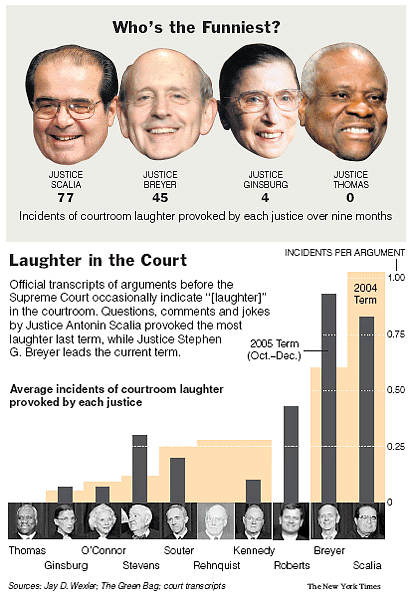
 Research by Jay D. Wexler, a law professor at Boston University, using transcripts of oral arguments at the United States Supreme Court. Story here.
****
I never saw any of them again - except the cops. No way has yet been invented to say goodbye to them. (Raymond Chandler, The Long Goodbye)
****
Her eyes rounded. She was puzzled. She was thinking. I could see, even on that short acquaintance, that thinking was always going to be a bother to her. (Raymond Chandler, The Big Sleep)
****
On nights like that every booze party ends in a fight. Meek little wives feel the edge of the carving knife and study their husbands' necks. Anything can happen. (Raymond Chandler, "Red Wind")
****
Education is something which should be apart from the necessities of earning a living, not a tool therefore. It needs contemplation, fallow periods, the measured and guided study of the history of man's reiteration of the most agonizing question of all: Why? Today the good ones, the ones who want to ask why, find no one around with any interest in answering the question, so they drop out, because theirs is the type of mind which becomes monstrously bored at the trade-school concept. (John D. MacDonald)
****
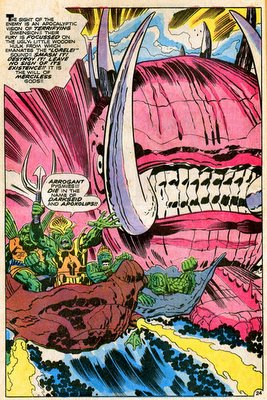
"Jack Kirby was a master of his craft, and he produced outrageous, wacky shit like this with such certainty and skill that you either had to embrace it or just stop reading comics altogether because you suck." Dave’s Long Box
****
“The appeal is meant to raise money for UNICEF projects in Burundi, Congo and Sudan, Henon said. However, because of its graphic and disturbing scenes, this cartoon is not for everyone. The advertisement is aimed at an adult audience and is shown only after 9 p.m. to avoid upsetting youngsters.
The video is peacefully introduced by birds, butterflies and happy Smurfs playing and singing their theme song when suddenly, out of the sky, bombs rain down onto their forest village, scattering Papa Smurf and the rest as their houses are set ablaze.
The bombs kill Smurfette, leaving the orphaned Baby Smurf weeping. The ad ends with the text "don't let war destroy the children's world.’... UNICEF traditionally uses real-life images of playing and laughing children but decided to change it for something that would shock people, Henon said.
‘The public is not easily motivated to do things for humanitarian causes and certainly not when it involved Africa or children in war,’ he said.... ‘We see so many images that we don't really react anymore,’ said Julie Lamoureux, account director at Publicis, an advertising agency that drew up the campaign for UNICEF Belgium. ‘In 35 seconds we wanted to show adults how awful war is by reaching them within their memories of childhood.’" (News Story)
****
“When a book, any sort of book, reaches a certain intensity of artistic performance it becomes literature. That intensity may be a matter of style, situation, character, emotional tone, or idea, or half a dozen other things. It may also be a perfection of control over the movement of a story similar to the control a great pitcher has over the ball.” (Raymond Chandler)
****
Bill and Emily Hanavan at Christmas.
According to the National Oceanography Center in Britain, the flow of the Gulf Stream has been reduced by 30 percent since 1957. This is caused by freshwater flooding into the North Atlantic from the melting of the Arctic and Greenland ice caps.
****
“The number of Guantanamo Bay prisoners taking part in a hunger strike that began nearly five months ago has surged to 84 since Christmas Day, the U.S. military said on Thursday....The prisoner population, which the Pentagon says numbers about 500, is believed to be uniformly Muslim. Only nine have been charged with any crime....The detainees began the strike in early August after the military reneged on promises to bring the prison into compliance with the Geneva Conventions, their lawyers said. Detainees are willing to starve to death to demand humane treatment and a fair hearing on whether they must stay, the lawyers said.
Most of the detainees were captured in Afghanistan and have been held for nearly four years.”
--Reuters news story, Dec 30, 2005
****
“The streets were dark with something more than night.”
-- Raymond Chandler
****
I don't find anything perceptually accurate or agreeable or sensical about the media view of American culture.
-- Jim Harrison
****
The fact is, the media never gets off the interstate unless there's a major explosion.
-- Jim Harrison
****
Down these mean streets a man must go who is not himself mean, who is neither tarnished nor afraid. He is the hero, he is everything. He must be a complete man and a common man and yet an unusual man. He must be, to use a rather weathered phrase, a man of honor, by instinct, by inevitability, without thought of it, and certainly without saying it.— Raymond Chandler, "The Simple Art of Murder”
****
I asked a French critic a couple of years ago why my books did so well in France. He said it was because in my novels people both act and think. I got a kick out of that.
-- Jim Harrison
****
You spend all your life trying to do something they put people in asylums for.
-- Henry Fielding
See Also: Commonplace Book 1
[A "Commonplace Book" is a collection of random quotations, favorite authors, conversations, clippings, or scribbles on a bathroom wall. Entries are not considered a Rorschach test. Additions will be woven into the main body, with initials to credit the contributor.]
****
****
I know just enough about myself to know I cannot settle for one of those simplifications which indignant people seize upon to make understandable a world too complex for their comprehension. Astrology, health food, flag waving, bible thumping, Zen, nudism, nihilism -- all of these are grotesque simplifications which small dreary people adopt in the hope of thereby finding The Answer, because the very concept that maybe there is no answer, never has been, never will be, terrifies them. (John D. MacDonald)
****
“It is pretty obvious that the debasement of the human mind caused by a constant flow of fraudulent advertising is no trivial thing. There is more than one way to conquer a country.” (Raymond Chandler)
****
"We're looking with intensity at the next generation, trying to engage them early. We need people who will stand up and say, 'This is not acceptable in the 21st century.' Right now, this is not a battle we're winning." (Jennifer Parmelee on a video game, “Food Force”, developed for the World Food Program.)
****
I see more genuine sociability between the races in Mississippi than I see in Michigan. No question.
-- Jim Harrison
****
It's a tonic to find real readers because they just read massively.
-- Jim Harrison
****
 Research by Jay D. Wexler, a law professor at Boston University, using transcripts of oral arguments at the United States Supreme Court. Story here.
****
I never saw any of them again - except the cops. No way has yet been invented to say goodbye to them. (Raymond Chandler, The Long Goodbye)
****
Her eyes rounded. She was puzzled. She was thinking. I could see, even on that short acquaintance, that thinking was always going to be a bother to her. (Raymond Chandler, The Big Sleep)
****
On nights like that every booze party ends in a fight. Meek little wives feel the edge of the carving knife and study their husbands' necks. Anything can happen. (Raymond Chandler, "Red Wind")
****
Education is something which should be apart from the necessities of earning a living, not a tool therefore. It needs contemplation, fallow periods, the measured and guided study of the history of man's reiteration of the most agonizing question of all: Why? Today the good ones, the ones who want to ask why, find no one around with any interest in answering the question, so they drop out, because theirs is the type of mind which becomes monstrously bored at the trade-school concept. (John D. MacDonald)
****
"Jack Kirby was a master of his craft, and he produced outrageous, wacky shit like this with such certainty and skill that you either had to embrace it or just stop reading comics altogether because you suck." Dave’s Long Box

****
“The appeal is meant to raise money for UNICEF projects in Burundi, Congo and Sudan, Henon said. However, because of its graphic and disturbing scenes, this cartoon is not for everyone. The advertisement is aimed at an adult audience and is shown only after 9 p.m. to avoid upsetting youngsters.
The video is peacefully introduced by birds, butterflies and happy Smurfs playing and singing their theme song when suddenly, out of the sky, bombs rain down onto their forest village, scattering Papa Smurf and the rest as their houses are set ablaze.
The bombs kill Smurfette, leaving the orphaned Baby Smurf weeping. The ad ends with the text "don't let war destroy the children's world.’... UNICEF traditionally uses real-life images of playing and laughing children but decided to change it for something that would shock people, Henon said.
‘The public is not easily motivated to do things for humanitarian causes and certainly not when it involved Africa or children in war,’ he said.... ‘We see so many images that we don't really react anymore,’ said Julie Lamoureux, account director at Publicis, an advertising agency that drew up the campaign for UNICEF Belgium. ‘In 35 seconds we wanted to show adults how awful war is by reaching them within their memories of childhood.’" (News Story)
****
“When a book, any sort of book, reaches a certain intensity of artistic performance it becomes literature. That intensity may be a matter of style, situation, character, emotional tone, or idea, or half a dozen other things. It may also be a perfection of control over the movement of a story similar to the control a great pitcher has over the ball.” (Raymond Chandler)
****
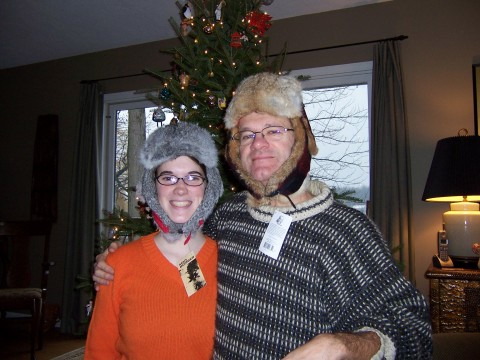
Bill and Emily Hanavan at Christmas.
According to the National Oceanography Center in Britain, the flow of the Gulf Stream has been reduced by 30 percent since 1957. This is caused by freshwater flooding into the North Atlantic from the melting of the Arctic and Greenland ice caps.
****
“The number of Guantanamo Bay prisoners taking part in a hunger strike that began nearly five months ago has surged to 84 since Christmas Day, the U.S. military said on Thursday....The prisoner population, which the Pentagon says numbers about 500, is believed to be uniformly Muslim. Only nine have been charged with any crime....The detainees began the strike in early August after the military reneged on promises to bring the prison into compliance with the Geneva Conventions, their lawyers said. Detainees are willing to starve to death to demand humane treatment and a fair hearing on whether they must stay, the lawyers said.
Most of the detainees were captured in Afghanistan and have been held for nearly four years.”
--Reuters news story, Dec 30, 2005
****
“The streets were dark with something more than night.”
-- Raymond Chandler
****
I don't find anything perceptually accurate or agreeable or sensical about the media view of American culture.
-- Jim Harrison
****
The fact is, the media never gets off the interstate unless there's a major explosion.
-- Jim Harrison
****
Down these mean streets a man must go who is not himself mean, who is neither tarnished nor afraid. He is the hero, he is everything. He must be a complete man and a common man and yet an unusual man. He must be, to use a rather weathered phrase, a man of honor, by instinct, by inevitability, without thought of it, and certainly without saying it.— Raymond Chandler, "The Simple Art of Murder”
****
I asked a French critic a couple of years ago why my books did so well in France. He said it was because in my novels people both act and think. I got a kick out of that.
-- Jim Harrison
****
You spend all your life trying to do something they put people in asylums for.
-- Henry Fielding
See Also: Commonplace Book 1
Real Music for Imaginary People #2: Pale Grey for Travis McGee

This started as an excuse to burn CDs for friends and in the spirit of play, think up playlists for fictional characters or people we admire. Last time I offered playlists for Wes, my favorite character from "Angel", and Giles from "Buffy the Vampire Slayer": Blues for Wesley Wyndham Price and Rupert aka Ripper
This time it's Travis McGee, my first adult fictional hero and in many ways still my favorite. I started reading McGee with "Darker Than Amber" when I was 15. Like Alonso Quijana, who read so many books of chivalry that his brains dried up, I still find the example of the "knight in slightly tarnished armor" more compelling than the alternatives I see around me. I remind you that we live in a world where Midge Decter can hold up Donald Rumsfeld as the essence of manliness and not be laughed out off the stage, where the self-aggrandizement of small-souled men is America's biggest export.
PALE GREY FOR McGEE mix, version 1:
1. "Christian Island", Gordon Lightfoot (At home on his boat and at peace; the smiling ambler McGee. To my uneducated palate, Plymouth gin has worked at recapturing its old glory and we can all switch back from Boodles. I am ready to stand corrected if you're buying.)
2. "Falling Down", Tears for Fears (Disorder enters the world and McGee gets dragged in... The search for wisdom beyond Top 40 is is why I love Tears for Fears and MacDonald great too; a clear view of America without the distortion and the yammer yammer yammer; as if Henry Thoreau were avenging injustice and not so shy with women.)
3. "Guantanamera (Guajira)", Los Lobos (Cuban song, the love of the body and the heart and the land and the troubled world, too, with the young girl coming out of the sea and the Jose Marti lyrics with "Con los pobres de la tierra
Quiero yo mi suerte echar..." "With the poor of the Earth I'll take my chances...")
4. "Desperation Samba", Jimmy Buffet (McGee sinking low and mean as in "A Deadly Shade of Gold". There's not as much Jimmy Buffet in this mix as some MacDonald fans might like, and if it were 30 years ago I might have agreed with them-- but Buffet's gone from a rarefied pleasure for happy wastrels to a stadium event for weekend warriors. The current packaging of cheeseburgers and parrotheads is the antithesis of everything McGee and his creator believed.)
5. "Take Five", Dave Brubeck Quartet (We know McGee likes Brubeck, and this is an eternally great song.)
6. "Lush Life", Chet Baker (One of the songs McGee asks for by name, and Shostakovich wouldn't fit on the CD. And I've lots of Chet Baker anyway.)
7. "El Canelo (Son Jarocho)", Los Lobos (Happy music again; MacDonald and his wife lived in Mexico after the war because it was cheaper; the big resort towns were still little fishing towns.)
8. "Chan Chan", Buena Vista Social Club (Happy and sensual and wistful all at the same time. I wanted to grow up to be Travis McGee when I was a teenager; now I want to grow up to be Compay Segundo, panama hat and all.)
9. "Hotel California", Gipsy Kings (more "Deadly Shade of Gold".)
10. "Pretty Good Year", Tori Amos (McGee sometimes looks in the mirror and despises what he sees; for me, I'm awed by Tori Amos' ability to get inside men/boy's heads like that.)
11. "Happy Phantom" Tori Amos (McGee on the upbound, making trouble for the cushioned and comfortable villains.)
12. "If I Had a Rocket Launcher" (Travis McGee wearing his pale-eyed glare of "a thousand disreputable McGees", the avenger in righteous wrath. I never think of McDonald as a gratuitously violent writer, then I realize that some of his scenarios would be NC-17 ratings if filmed. Like Boo Waxworth and that mangrove stump (shudder).)
15. "New York Minute", Don Henley (Counting the quick and the dead, the just and the unjust alike. Some radio stations pulled this song after 9/11. "Out here in the dark/ I heard the sirens wail/Somebody goin' to Emergency/ Somebody's Goin' to jail. / You find you someone to love, you better hang on Tooth and Nail; / The wolf is always at the door.")
16. "King of Pain", The Police (Old bills come due. Feel the pain and Bring the pain; that's McGee. And there are moments of cosmic vision turning from the personal to the universal. Tibetans like Choyam Trungpa say if you're going to be a hero, stand ready to have your heart broken.)
11. "The Dark Night of the Soul", Loreena McKennit (music responding to Saint John of the Cross' "Dark Night of the Soul"; McGee, for all the sun and fun, often see himself forever living on the dark side of the world, even as a child too aware of the shadows chasing the happy people-- and finding when most abandoned, a strange comfort and companionship in the twilight world. Brother to dragons, companion to owls-- God's own strange night creature, but much loved for all that.)
14. "Ordinary Man", Gordon Lightfoot (Travis coming to terms with himself, forgiving himself for his flaws. Asking the eternal woman, the anima, for forgiveness and blessing.)
15. "I'm Ragged but Right", Lightnin' Wells (The return of cheerfulness, like Pogo and Porky with their cigar box mandolins and fishing poles on board the Hon. Walter J. Kelly floating down the Okeefenokee towards Fort Mudge. McGee likes to sing this when he's drunk. Forty-seven renditions in "The Empty Copper Sea". I like to sing it, too.)
16. "Flor de Huevo (Son Locos)", Los Lobos (The sun is flashing on the water. We're still alive. A-yi!)
This is anything but a perfect list. I would probably liked to put "La Pistola y el Corazon" in there for instance. Part of the challenge is to do as much as you can with music you already have around the house. (If these are already favorite characters of yours, odds are you have a sympatico music collection as well.) Additions, corrections, and alternatives are welcome.
Friends of Ormondroyd's Official Graffiti Wall and Commonplace Book


Less personal than a journal or diary, the "Commonplace Book" is a collection of random quotations, favorite authors, conversations, clippings, and bon mots. Add your own or comment on others', as you might scribble on a wall. Your entries need not serve as a Rorschach test; quotes can be silly or profound, heartfelt or just a momentary thought. Play nice. Additions will be woven into the main body, with initials to credit the contributor.
Thanks, Pat, Pamela, et al...
"What annoys me is that Spielberg is such an egomaniac these days that it has to be 'Steven Spielberg's War of the Worlds. No, you pus-bag. It's H.G. Wells' War of the Worlds, and it wouldn't kill you to put his fucking name on it." --Harlan Ellison
"The more he spoke of his honor, the faster we counted our spoons."
attributed to Samuel Johnson, later to Emerson.
(MF)
On a bathroom wall: "My mother made me a lesbian."
Scrawled underneath: "If I get her the yarn, will she make me one too?"
(MF)
Nelson Algren's Three Rules for Living:
One: Never eat in a restaurant called "Mom's".
Two: Never play cards with a man called "Doc".
Three: Don't sleep with anyone who has more problems than you do.
(MF)
"The only thing in the world worth a damn is the strange, touching, pathetic, awesome nobility of the individual human spirit." -- John D. MacDonald (Travis McGee's credo for a knight-errant's banner)
(M.F.)
My favorite epitaph, the one I hope to earn, inshallah, is Falstaff's:
"Nay, sure, he's not in hell: he's in Arthur's bosom, if ever man went to Arthur's bosom. "
(the usual saying is "he sleeps in Abraham's bosom'; great-souled Falstaff prefered King Arthur, and so do I.)
(MF)
The secret of life is honesty and fair dealing. If you can fake that, you've got it made.
-- Groucho Marx (PR)
"In one hour of operation, the average gas mower emits the same amout of climate-changing hydrocarbons as a 1992 Ford Explorer driven over 23,000 miles."
-- Co-op America's Real Money, June/July 2002, adapted from The Organic Suburbanite by Warren Schultz, Rodale, 2001.(PR)
I don't need time. What I need is a deadline.
--Duke Ellington (PR)
Never attribute to malice that which can be adequately explained by
stupidity.
--Hanlon's Razor (PR)
"Pardon him, Theodotus. He is a barbarian, and thinks the customs of his tribe and island are the laws
of nature." - George Bernard Shaw, Caesar and Cleopatra
(RAH)
"Oh, Goddamnit, we forgot the silent prayer!" -- Dwight D. Eisenhower
(JDM)

(PJ) --Steve Benson, The Arizona Star
“[Tolstoy’s] opinions about syphilis … are not merely disreputable but they unmask an ignorant man who hasn’t taken the trouble in the course of his long life to read two or three books written by specialists.... Tolstoy calls doctors scoundrels and flaunts his ignorance of important matters because he is a second Diogenes whom no one will report to the police or denounce to the newspapers. So to hell with the philosophy of the great men of the world.... Reason and justice tell me that there is more love for mankind in electricity and steam than in chastity and abstinence from meat” --Chekhov (in letters)
Subscribe to:
Posts (Atom)