"All the Stones the Builders Rejected"  (And some days it takes more Stones than others...) Where Mythical Bestiary meets Contemporary Culture and Chews On Its Leg Until Covered with Slobber.
Showing posts with label television. Show all posts
Showing posts with label television. Show all posts
The Literary Review, from Harry's Library of Distinction
John Candy as Harry from Harry's Sex Shop in downtown Mellonville: "Just look for me, the guy with a snake on his face." You can admit it now, SCTV was almost always funnier than the self-mythologizing Saturday Night Live.

Falling Up

As of 11:00 PM, they're calling New Hampshire for Clinton, and raving about her "comeback" as much as they were razzing after Iowa. Most embarassing moment in the coverage: Anderson Cooper on CNN with (insert gagging sound) Ralph Reed, Donna Brazile, and William Bennet as "expert commentators". If they were being paid by the distance between accomplishments and pretension, they'd be on as comic relief like Bob Ueker talking about baseball.
We haven't been offered expertise like this since William Kristol got hired by the Times (with a misattribution in his very first column) and Lynne Spears got a book contract to write about Christian parenting.
I'd be very to-err-is-human about all this if they weren't being paid so damn-- much-- money.
Tom Snyder
I'll miss him. After Cavett was cancelled in 1975, Tom Snyder was the only antidote to Johnny Carson's, and Letterman's, and Leno's approach of Amusing Ourselves to Death. Yeah, this country needs more starlet interviews and more smirking hosts. I still remember him having Alfred Hitchcock on for an entire show at Halloween to tell ghost stories, at least one of which is still scarred on my brain. I remember him asking John Lennon about what was new in music, and Lennon predicting a big future for a sound we'd never heard called "reggae", and Harlan Ellison complaining that when he handed in a Star Trek movie script in which the universe was destroyed, the studio told him "Not Big Enough!".
As easy as he was to parody, with the laugh, and the cigarettes, and his obvious enthusiasm for talking about sex with Nancy Friday, and the other sins that televised flesh is heir to, you always felt Snyder was sincere in his curiosity. He had an endearing ability to laugh at himself and at celebrity culture, even if more people recognized the parody than had ever seen the show.
The blow-dried haircut was of his era, but he had an old-fashioned broadcaster's sense of hanging out with the old timers like Murrow and Red Barber and the rest of the journeyman. A guy who knew him remembers that Snyder celebrated his first power lunch with the big network brass in 1972 at Cassell's Hamburgers in Koreatown. He never pretended the studio furniture was anything other than foamboard and pretty colors, and for every television actor interview skipped over, there was Harlan Ellison and Ken Kesey and Joan Jett (for men of a certain age, everybody's favorite Girl You Know Would Be Bad For You) and Hitchcock and the Ramones, Sam Ervin, and the rest of the Watergate figures (and on the dark nutball, shudder-provoking side, Charles Manson and Ayn Rand and Timothy Leary).
Harlan Ellison:
Ken Kesey, Jerry Garcia, et al:
The great animator Ward Kimball:
As easy as he was to parody, with the laugh, and the cigarettes, and his obvious enthusiasm for talking about sex with Nancy Friday, and the other sins that televised flesh is heir to, you always felt Snyder was sincere in his curiosity. He had an endearing ability to laugh at himself and at celebrity culture, even if more people recognized the parody than had ever seen the show.
The blow-dried haircut was of his era, but he had an old-fashioned broadcaster's sense of hanging out with the old timers like Murrow and Red Barber and the rest of the journeyman. A guy who knew him remembers that Snyder celebrated his first power lunch with the big network brass in 1972 at Cassell's Hamburgers in Koreatown. He never pretended the studio furniture was anything other than foamboard and pretty colors, and for every television actor interview skipped over, there was Harlan Ellison and Ken Kesey and Joan Jett (for men of a certain age, everybody's favorite Girl You Know Would Be Bad For You) and Hitchcock and the Ramones, Sam Ervin, and the rest of the Watergate figures (and on the dark nutball, shudder-provoking side, Charles Manson and Ayn Rand and Timothy Leary).
Harlan Ellison:
Ken Kesey, Jerry Garcia, et al:
The great animator Ward Kimball:
LITERATURE: DECONSTRUCTING WESLEY (and Illyria): What I'm Reading, a Vacation from Grief and Politics
From "A Sense of the Ending: Schrödinger's 'Angel'" a literary essay by Roz Kaveny, published online and in "Reading Angel : The TV Spin-off With a Soul" edited by Stacy Abbott:
".... In Angel, the character who has most consistently acted as Angel’s shadow and surrogate is Wesley, whose story has throughout been that of ‘The Man who Learns Better’. Remembered by Angel and the audience as the largely useless fop of Buffy Season Three, the ex-Watcher has re-invented himself as a leather-clad rogue demon-hunter without having changed his essence. The ways in which he changes are many and varied: to pick but one, he consistently chooses Angel over earlier loyalties to the Watchers’ Council, even when what appears to be his father arrives claiming to be its emissary (‘Lineage’, 5007). Wesley is a character whose essence is to lose and yet lose so honourably as to be admirable.
  He is the ‘loyal servant’ who betrays Angel by kidnapping his son, but does it to save him from the prophesied guilt of killing him – and in the long run, Angel has to kill Connor so that he can be reborn as the sane heroic youth of Season Five.
  Wesley sells his own soul to Wolfram & Hart in a vain attempt to save that of Lilah, whom he no longer loves; he finally wins Fred, only to lose her to Illyria; and it is his death that finally redeems Illyria by teaching her the meaning of human grief. Wesley’s death is both the price of Angel’s victory and a demonstration that the mission is about self-sacrifice."
 ".... ‘You’re not looking at your friend; you’re looking at the thing that killed him’ (Giles in ‘The Harvest’, B1002) is even truer of Illyria than it was of, say, Harmony; Illyria is a long dead god/demon that inhabits the corpse of Fred
  and devoured her soul in the fires of her re-creation. Yet, as with many vampires, it is not as simple as that; even before the restoration of Fred’s memories of her penultimate year and a half of life she is totally Illyria,
  yet increasingly conjoined or contaminated with elements of Fred. If Illyria were wholly and solely the creature she claims, and believes herself, to be, she would not impersonate Fred for the dead woman’s parents, or offer to give Wesley a final perfect day. Both Buffy and Angel have always been shows about redemption; the reason why Wesley refuses Illyria’s offer and then accepts it when mortally wounded is not that he dies having finally chosen illusion over reality, but that her offer is an outward sign of genuine inward change. In an interview at the Hyperion convention, Amy Acker said that Joss Whedon redirected the scene having realized that it was not about Wesley’s love for Illyria or Fred, but about Illyria’s love for Wesley."
".... In Angel, the character who has most consistently acted as Angel’s shadow and surrogate is Wesley, whose story has throughout been that of ‘The Man who Learns Better’. Remembered by Angel and the audience as the largely useless fop of Buffy Season Three,
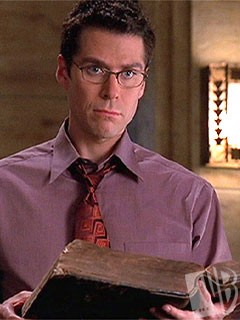 the ex-Watcher has re-invented himself as a leather-clad rogue demon-hunter without having changed his essence. The ways in which he changes are many and varied: to pick but one, he consistently chooses Angel over earlier loyalties to the Watchers’ Council, even when what appears to be his father arrives claiming to be its emissary (‘Lineage’, 5007). Wesley is a character whose essence is to lose and yet lose so honourably as to be admirable.
 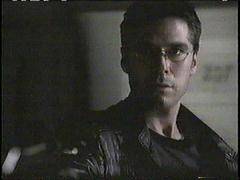 He is the ‘loyal servant’ who betrays Angel by kidnapping his son, but does it to save him from the prophesied guilt of killing him – and in the long run, Angel has to kill Connor so that he can be reborn as the sane heroic youth of Season Five.
 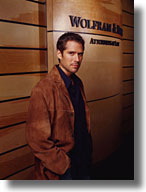 Wesley sells his own soul to Wolfram & Hart in a vain attempt to save that of Lilah, whom he no longer loves; he finally wins Fred, only to lose her to Illyria; and it is his death that finally redeems Illyria by teaching her the meaning of human grief. Wesley’s death is both the price of Angel’s victory and a demonstration that the mission is about self-sacrifice."
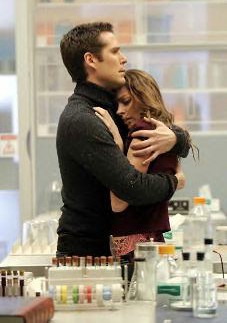 ".... ‘You’re not looking at your friend; you’re looking at the thing that killed him’ (Giles in ‘The Harvest’, B1002) is even truer of Illyria than it was of, say, Harmony; Illyria is a long dead god/demon that inhabits the corpse of Fred
 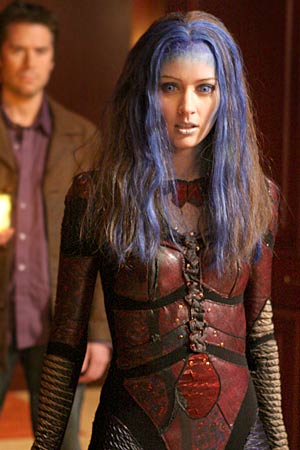 and devoured her soul in the fires of her re-creation. Yet, as with many vampires, it is not as simple as that; even before the restoration of Fred’s memories of her penultimate year and a half of life she is totally Illyria,
 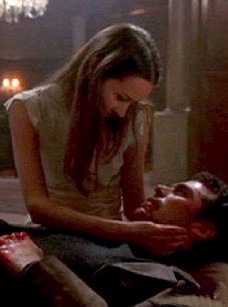 yet increasingly conjoined or contaminated with elements of Fred. If Illyria were wholly and solely the creature she claims, and believes herself, to be, she would not impersonate Fred for the dead woman’s parents, or offer to give Wesley a final perfect day. Both Buffy and Angel have always been shows about redemption; the reason why Wesley refuses Illyria’s offer and then accepts it when mortally wounded is not that he dies having finally chosen illusion over reality, but that her offer is an outward sign of genuine inward change. In an interview at the Hyperion convention, Amy Acker said that Joss Whedon redirected the scene having realized that it was not about Wesley’s love for Illyria or Fred, but about Illyria’s love for Wesley."
Subscribe to:
Posts (Atom)