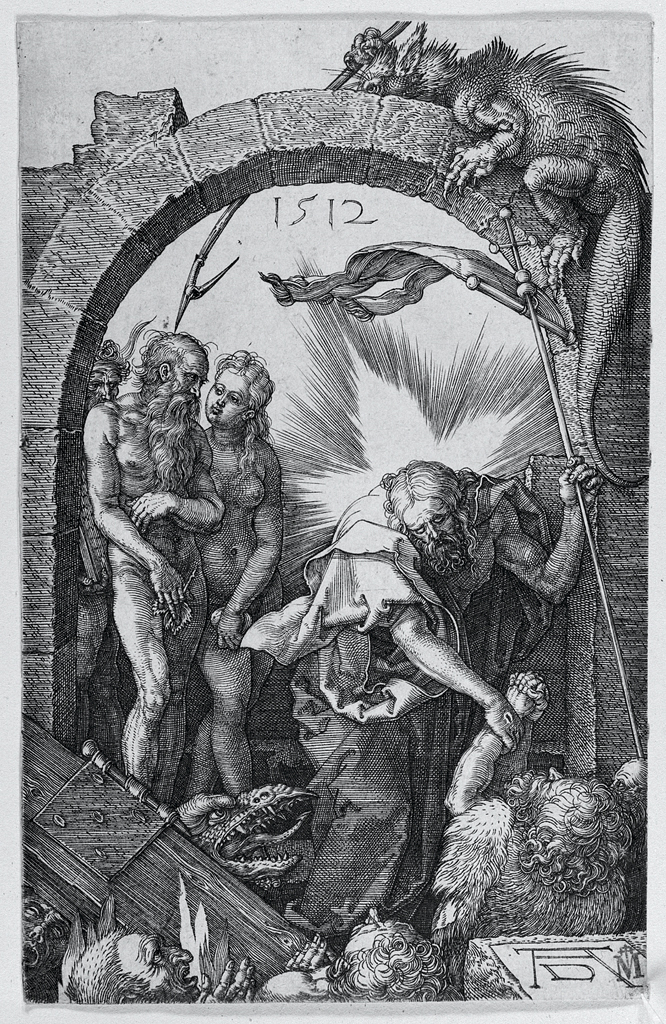
"All the Stones the Builders Rejected"
(And some days it takes more Stones than others...) Where Mythical Bestiary meets Contemporary Culture and Chews On Its Leg Until Covered with Slobber.
Exxon Mobil, Shell, Chevron, and ConocoPhillips are going to receive $18 billion dollars' worth of tax breaks over the next ten years, in spite of $123 billion dollars in profit and poor people spending 10 percent of their income on gas because American corporations have sabotaged every attempt to create European style mass transit in this country.
In 1886 the Supreme Court unwittingly created a pantheon of living gods on Earth by granting corporations the same rights given to individuals. In a dispute between Santa Clara County and the Southern Pacific Railroad, the Court defined corporations as "persons", that according to the 14th Amendment (intended to protect freed slaves), "no state shall deprive any person of life, liberty or property, without due process of law", and that California could not tax corporations differently than individuals.
A corporation can effectively become an immortal being of immense power by replacing worn out personnel and acolytes, and if need be, by moving across the street and changing its name, as gods themselves are wont to do. Modern life has thus become a competition between unconnected individuals and the thousands who have allied themselves with some corporate master. This puts a free man in the unenviable position of a journeyman carpenter trying to compete with the team building a pyramid.
To join a corporation, to consider its mission statement your holy writ, requires the corporate believer to hold fast to certain professions of faith. The Senior Vice President of Exxon Mobil, Stephen Simon, tells us that the oil companies deserve the tax break because "imposing punitive taxes on American companies will discourage the investments needed to safeguard our energy security." Shell's Hofmeister has the gall to blame the Interior Department. "The U.S. government restricts supply to American consumers," and Peter Robertson, vice chairman of Chevron, chimes in that the Congress should "open up the 95 percent of the outer continental shelf that's off limits" to drilling. Poor babies; Exxon only made $40 billion dollars last year, and only 9 percent of that was profit margin.
Remember when we used to smile at Grandfather Heinlein's science fiction prophecy that nation states would be replaced by corporations?
Joss Whedon's Serenity has been my default movie of late-- whenever it's on cable, whenever I need something rousing to keep me pedaling or escapist heroes to root for, that's the film I've been watching over and over until I have the dialogue memorized. As Robert Parker's Spencer said about watching The Magnificent Seven , it's not about the plot anymore, it's about the ritual. I still love Whedon's dialogue, and the tension dispelling laughs, and that "Fuck, Yeah!" moment when the Reavers come home to roost, a splash worthy of Jack Kirby. Reams of scholarly publications would suggest that there are themes loose in Whedon's work that lead from cult science fiction to some of the dark little secrets of contemporary America. What follows is not so much what I know, as what I think I know.
The crew of Serenity is composed of four combat veterans who fought for the losing side in a gallant but mismatched rebellion against a wealthy empire. Along the way they've adopted up a Graham Greene priest with a past, a tomboy engineer, a slumming courtesan, and finally an upper-class doctor and his half-mad, half-prodigy sister, who for reasons unknown are avoiding the authorities. They all live hand-to-mouth (and planet to planet) on the fringes of acceptable society and aren't too proud about what they'll do next to keep the wolves at bay. There's a deliberate Old West look to the space frontier, a trope borrowed from Frederick Turner and Robert Heinlein, who argued that mules, horses and 19th century technology still have a place in everyday life when you're millions of miles away from advanced infrastructure. Tractors, for example, can't reproduce themselves like horses and donkeys can.
All these survivors were injured in some way by a conflict with the dominant culture, with the possible exception of the mercenary Jayne, who's too comically obtuse to think there's anything unhealthy about living out of a locker. It occurs to me that this is a common trait in fictional characters and people I love: the damaged cast of Whedon's Angel, the Chilean survivors in the novels of Roberto Bolaño, the down-and-out moan of the great blues men's lyrics, even historical figures. For all that the dominant culture admires Richard F. Burton, Truman, or even Churchill, they were dismissed or despised by their contemporaries. When Churchill visited America in the 1930s, he had to be hurried onto a train and paid in cash by a minister in Grand Rapids to avoid the bill collectors. Vincent VanGogh, 'buked and scorned, is now a secular saint.
Japanese culture already has a well-established place for the "beautiful loser", as described in studies like Ivan Morris' The Nobility of Failure: Tragic Heroes in the History of Japan, and enacted by the animated crew of the good ship Cowboy Bebop. Japan is the place where "the nail that sticks up gets hammered down", homogenous in its culture (Koreans and burakumin need not apply). It is not necessary for a protagonist to "win" or "succeed" in order to be admired. There's nothing the Japanese Romantic loves more than a doomed hero waiting in the snow for one last scuffle with an unassailable foe. If there are drops of blood against the whiteness, if the snowflakes on his cheek mix with a single tear, so much the better. The beautiful loser has appeared in Western culture before-- in Hemingway's For Whom the Bell Tolls and The Old Man in the Sea, in popular culture through Raymond Chandler and John D. MacDonald, the films and novels where "a man must walk these mean streets who is not himself mean". When even the Mormons start talking about "the nobility of failure", you know we're on to something here.
Barack Obama (yeah) and Huckabee (eh) won the Iowa caucus last night against machine candidates Romney and Clinton. (Hilary Clinton may be infinitely preferable to any Republican short of Lincoln, but don't kid yourself, she's the machine candidate-- she and her husband are now and have been Wall Street Democrats, albeit efficent ones. And Romney is, well, a machine. Amazing what they can do with synthetics these days.) For one brief moment we can enjoy a triumph against the corporate interests and their lackies, and get out our rain coats before the shit storm starts. We don't even have a choice in Michigan-- all of the Democratic candidates have dutifully taken their name off the primary ballot with the exception of Hillary "Party Rules? I AM the Party!" Clinton. All we can do is make a futile gesture against Clinton's inevitability by voting "non-committed" and watch the Michigan Democratic Party piss away $10 million dollars.
Someting there is in human nature that decides early on whether to be a Joiner or a... well we don't really have an objective word for this, do we? "Individual" and "Lone Wolf" are loaded semantically as are "rebel", "maladjusted", and eventually, with the triumph of the dominant culture, "loser". There must have been a few Egyptians standing around who would rather notwork on the pyramids. Pyramids are fine evidence of corporate cooperation, cathedrals are beautiful testimony to group effort and aspiration-- but what if you don't want to add your little stone to the megalith?
The dangers lurking in the "beautiful loser's" world view are self-pity, despair, and immobility. at least two of which are releated to Deadly Sins. There is danger of the survivor's syndrome described in non-fiction like Friendly Fire and seen on the street in skepticism at official explanations-- having been so often lied to, the survivor no longer trusts or recognizes the truth even when it's finally revealed. There's the stubborn futility of activists not being able to take yes for an answer, an inability to compromise, like the John Cleese character so stupid that he doesn't know when he's beaten but doesn't know when he's winning, either. Principle becomes self-congratulatory martyrdom and narcissism; Ralph Nader runs for president and sneers at the sell-outs and compromisers.
The problem with the corporate culture favored by unregulated capitalism is that it has little tolerance for people and things that will not or can not submit to the corporate structure. A polar bear cannot wise up and adjust to the economy's demand for increased carbon emissions, and it may be that some people can't, either. The title of a study of the Chicago machine spoke volumes: Don't Make No Waves...Don't Back No Losers. Joiners tell themselves that the corporation, the organization, the church, the group will protect and nourish them all the days of their life, but the dirty little secret is that the moment an individual no longer fits the master plan, they are tossed aside like a used tissue. A chauvinist for the status quo is just a worker who hasn't been laid off yet.
In Whedon's Serenity, the dominant culture that knows what's best for us all is represented by a military-industrial government called "The Alliance". In his earlier series Angel, it was the corporate law firm Wolfram and Hart. Serenity is oddly the more optimistic of the two. Broadcasting the truth about the Alliance's activities does some small amount of good, whereas in Angel, the Powers that Be are very bad losers, humanity is indifferent to the struggle, and when Angel takes an elevator to confront "the Source of all Evil", he finds himself back on the street, like the "egress" in Barnum's museum: ANGEL:Why fight? HOLLAND:That's really the question you should be asking yourself, isn't it? See, for us, there is no fight. Which is why winning doesn't enter into it. We - go on - no matter what. Our firm has always been here. In one form or another. The Inquisition. The Khmer Rouge. We were there when the very first cave man clubbed his neighbor. See, we're in the hearts and minds of every single living being. And that - friend - is what's making things so difficult for you. See, the world doesn't work in spite of evil, Angel. It works with us. It works because of us. (The elevator stops, the doors open to reveal the L.A. city streets) HOLLAND:Welcome to the home office. ANGEL: (horrified) This isn't... HOLLAND: Well, you know it is. You know that better than anyone. Things you've seen. Things you've, well - done. You see, if there wasn't evil in every single one of them out there, why, they wouldn't be people. They'd all be angels. (Angel drops the glove and wanders out of the elevator, petrified and expressionless) HOLLAND: Have a nice day.
The difference here is that Angel's fight is supernatural, the province of monks and boddhisatvas, whereas the crew of Serenity are contending with a human construct of political alliances, military might and industrial capacity. Corporations are busy, busy, little enterprises, with a hundred soldier ants and a hundred workers for every contingency, and those resisting the corporate takeover of everything are understaffed and underfunded. That cultural complex can seem mighty mighty, as Nelson Algren said of Chicago; it even possesses a kind of immortality, granted when our courts decided that a corporation has rights similar to an individual's. To money and raw power, add the kind of religious awe that most Americans seem to have for the social construct around them, their insistence that this pyramid we're building is just "the way things are", and you've got a real one-sided fight on your hands.
“The coat colour of mammoths that roamed the Earth thousands of years ago has been determined by scientists. Some of the curly tusked animals would have sported dark brown coats, while others had pale ginger or blond hair. The information was extracted from a 43,000-year-old woolly mammoth bone from Siberia using the latest genetic techniques.” (The BBC)
*** “We do not mean the physical differences, more the fact that [girls] remain unimpressed by your mastery of a game involving wizards, or your understanding of Morse Code. Some will be impressed, of course, but as a general rule, girls do not get quite as excited by the use of urine as a secret ink as boys do.” (The Dangerous Book for Boys, Conn Iggulden and Hal Iggulden)
*** McCullough said that the problem starts with the training that teachers receive. "Too many have degrees in education," he said, "and don't really know the subject they are teaching." "It is impossible to love a subject you don't know," he said, "and without a passion for history, the teaching of history becomes a matter of rote learning and drudgery." Without personal knowledge of history and enthusiasm for the subject, "you're much more dependent on the textbook," and, with rare exceptions -- he mentioned the great one-volume American history text by Daniel Boorstin, the late librarian of Congress -- "you read these texts and ask yourself, 'Are they assigned as punishment?' (David McCullough testifying before Congress regarding the teaching of History in American schools)
*** “In their book, The Politics and Poetics of Transgression, Peter Stallybrass and Allon White write a great deal about representations of the body. Citing Bakhtin, they discuss the difference between the body as represented in popular festivals (low culture) and classic statuary (high culture). The high culture body "has no openings or orifices whereas grotesque costumes and masks emphasize the gaping mouth, the protuberant belly and buttocks, the feet and the genitals (Stallybrass and White, 22). The classical body is a perfect closed system, unsullied by the world around it. It is pure and self-contained, whereas the grotesque body with its various orifices and protrusions is constantly excreting or consuming.” (William Meyer)
*** “We all, broadly, adhere to the same principles of what a man should cover up. But it goes without saying that there are massive cultural differences in what is considered decent for a woman. And it ought to go without saying that the more repressive a culture is, the more it restricts its womenfolk, the more clothing it requires them to wear.... Nose, faces, ankles, we can all agree on. Decolletage, all of a sudden, seems to be a battleground.... It seems to me that cleavage perfectly bifurcates the old and new misogyny. Old school feminism doesn't allow decolletage, new school feminism requires it - or at the very least, requires us to defend it. Maybe we could bridge this by showing one at a time.” (Zoe Williams in the UK Guardian)
*** How Hello Kitty Commodifies the Cute, Cool and Camp: 'Consumutopia' versus 'Control' in Japan
“Asked about Hello Kitty, respondents judged those interested in this 'character good' within a framework of freedom/self-autonomy versus coercion/compulsion. The former is associated with what may be termed 'consumutopia' (a counter-presence to mundane reality fueled by late capitalism, pop culture industry, consumerism), while the latter is connected to 'control', a critical view of self/collective relations that also comments on Japanese ethno-identity. Hello Kitty also demonstrates the need to focus not just on different tastes within a society, but also on ambiguous and diverse attitudes within the same individual. Such diversity allows Sanrio, Hello Kitty's maker, to link within one individual different modes of self-presentation, chronologically corresponding to girlhood ('cute'), female adolescence ('cool'), and womanhood ('camp'). Thus, as people mature, appeals to nostalgia encourage a reconnection with the past by buying products united by one leitmotif; same commodity, same individual, different ages/tastes/styles/desires.” (Brian McVeigh , Tôyô Gakuan University, Japan in the Journal of Material Culture, Vol. 5, No. 2, 225-245 (2000)
*** “Going into Iraq was, in effect, punching our fist into the largest hornet’s nest in the world.” (David Halberstam)
*** “In a world where darn near every corporation known to man wants to tie in to the children, teen-ager and 18-34 male categories more than anything else in the world (only could explain the baby driving sketch commercials that British Petroleum is running, eh?), the comic book industry seems to be going away from them, and I'm not even sure if they know why.” (posted by “miyaa” on the blog philosophical snarks, on the increasing sexualization of female characters and dearth of comics for younger readers.)
“...The Walter Mondale fiasco in the mid-eighties prompted a few shrewd Washington insiders to create the notorious “pro-business” political formula of the Democratic Leadership Council, which sought to end the party’s dependence upon labor money by announcing a new willingness to sell out on financial issues in exchange for support from Wall Street. Once the DLC’s financial strategy helped get Bill Clinton elected, no one in Washington ever again bothered to question the wisdom of the political compromises it required. “Within a decade, the process was automatic – Citibank gives money to Tom Daschle, Tom Daschle crafts the hideous Bankruptcy Bill, and suddenly the Midwestern union member who was laid off in the wake of Democrat-passed NAFTA can’t even declare bankruptcy to get out from the credit card debt he incurred in his unemployment. He will now probably suck eggs for the rest of his life, paying off credit card debt year after year at a snail’s pace while working as a non-union butcher in a Wal-Mart in Butte. Royally screwed twice by the Democratic Party he voted for, he will almost certainly decide to vote Republican the first time he opens up the door to find four pimply college students wearing I READ BANNED BOOKS t-shirts taking up a collection to agitate for dolphin-safe tuna.” (
"I hope we shall crush in its birth the aristocracy of our moneyed corporations which dare already to challenge our government in a trial of strength, and bid defiance to the laws of our country." (Thomas Jefferson)
*** "...the big trouble with dumb bastards is that they are too dumb to believe there is such a thing as being smart." ( Kurt Vonnegut, Jr.)
*** “... the very first example of congressional oversight in our history was an inquiry into President George Washington’s deployment of the military. In that case, a committee appointed by the House in 1792 was authorized to investigate the disastrous defeat the year before of Gen. Arthur St. Clair by Indians in the Ohio Territory, with the power to issue subpoenas for “persons, papers and records as may be necessary to assist their inquiries.” (Stanley Brand
*** “.... One day, Tomasello and Paabo were talking in the institute's cafeteria about a family in England with a remarkable genetic defect. Some members of the family have a mutation in a gene known as FOXP2, which helps direct the development of the brain during infancy and childhood. Every family member with the mutation had great difficulty speaking. Paabo had been thinking about how to identify genes that had changed during human evolution to make speech possible, and FOXP2 seemed like a prime candidate. He and his co-workers sequenced the gene—that is, they figured out the order of the DNA bases that make up FOXP2—in six different species. They found that it was one of the most stable genes they had ever studied; from mice to rhesus macaques to chimps, the protein produced by the gene is almost exactly identical, suggesting that the gene itself plays a fundamental role in animal function. But in humans the gene had undergone a slight modification. About 250,000 years ago, according to the scientists' calculations, two of the molecular units in the 715-unit DNA sequence of the gene abruptly changed. That's not long before modern humans first appeared in the fossil record. Could the changes in FOXP2 have enabled modern humans to speak? And could articulate speech have given modern humans an edge over the Neanderthals and other archaic humans?
“That's certainly what some newspaper stories implied, labeling FOXP2 a "language gene." But Paabo and other scientists are more cautious. FOXP2 "is one of who knows how many genes that affect language ability," says Ken Weiss, an expert on evolution and genetics at Pennsylvania State University. The change in FOXP2 might have been entirely coincidental. Or the gene may be related to language indirectly—for example, by influencing coordination. And some scientists argue that language evolved much earlier than our version of FOXP2, and that archaic humans also had speech....” (Smithsonian magazine)
*** “As usual, Cheney's remarks reinforce mistaken notions about terrorism. He suggests to the bomber forces that only taking the fight to terrorists can turn the tide. “Cheney doesn't talk about stealing the audience from terrorists or robbing from them the ability to exploit grievances that many in the Middle East feel.” (Steve Clemons)
*** "Many of the governments here in South America are now made up of people who were thrown in prison and tortured in the past, so they're taking a very different look at the role of their armed forces and their military relations with the United States." (Lisa Sullivan, Caracas-based organizer for SOA [School of the Americas] Watch)
*** "Look at the JLA; They all map on the chakras. Batman is a human being of ultimate power [and intention.] Flash is communication. Superman is about giving selflessly. He represents the sun. He is that thing that loves us unconditionally. ,,, Batman is like Christ harrowing Hell, because only he can withstand it. He endures everything for us. Batman is a character who was almost brought to the brink of his destruction, but who persevered. Batman is our shadow and we have to look at the shadow and integrate the shadow. ... Mr. Miracle [an escape artist who survived a Dickensinian childhood on a Hell planet] is the transcendent character, the seventh Chakra.” (Grant Morrison)
*** “In the 1970s form began to be considered uncool. It represented the rigid establishment. So everything started to become vague and mushy.” (John Kricfalusi)
*** “I remember when the famous phrase "Live from Studio 60, it's Friday Night In Hollywood!" used to mean something. Back then, when the show first came out, I'd stay home every Monday night just to make sure I didn't miss an episode. There was such a buzz around the show in the weeks leading up to its premiere because it was something new, something no one had ever seen before. But ever since Judd Hirsch left, * the show's totally gone downhill.” (Review by “Artie Mayer” in The Onion)
[* NOTE: Judd Hirsch’s character only appeared in the first five minutes of the show.]
*** "I passionately hate the idea of being with it, I think an artist has always to be out of step with his time." (Orson Welles)
*** “There are two very separate worlds: the marketplace, and the bustling bazaar that is my brain. The brain place is crowded with goods, ideas, sequels, spinoffs, animated versions, miniseries, radio dramas -- this is just the used goods. All the new wares are in there as well and it's deafening. Once I create a verse I never let go of it. And figuring out how much of my energy should be devoted to reawakening the projects you all love with the actors and characters I all love, and how much should be forging ahead and creating entirely new works (which you are contractually obligated to love) is exhausting. More than you know. You know the horse caught bwtween two pools of water? Add seven pools, and make the horse wicked A.D.D. The other world, the marketplace, I don't even begin to understand or predict.” (Joss Whedon)
*** “By labeling concerns of American workers [regarding cheap labor from illegal immigrants] “nativism”, you dismiss those concerns as reactionary or invalid. Characterizing those concerns as racist or xenophobic allows you to ignore the economic impact on the working class... You are playing into the multinational corporations’ agenda. Way to go.” (Les Reed, in a letter to The Nation 11/13/2006)
*** “If you’re talking about mugging little old ladies, you don’t say, ‘What’s our target for the rate of mugging little old ladies?’ You say, ‘Mugging little old ladies is bad, and we’re going to try to eliminate it.’ You recognize you might not be a hundred percent successful, but your goal is to eliminate the mugging of little old ladies. And I think we need to eventually come around to looking at carbon dioxide emissions the same way.” (Ken Caldeira, a scientist at Lawrence Livermore National Laboratory, whose work for the Department of Energy showed an increasing acidification of the oceans.)
 (And some days it takes more Stones than others...) Where Mythical Bestiary meets Contemporary Culture and Chews On Its Leg Until Covered with Slobber.
 To join a corporation, to consider its mission statement your holy writ, requires the corporate believer to hold fast to certain professions of faith. The Senior Vice President of Exxon Mobil, Stephen Simon, tells us that the oil companies deserve the tax break because "imposing punitive taxes on American companies will discourage the investments needed to safeguard our energy security." Shell's Hofmeister has the gall to blame the Interior Department. "The U.S. government restricts supply to American consumers," and Peter Robertson, vice chairman of Chevron, chimes in that the Congress should "open up the 95 percent of the outer continental shelf that's off limits" to drilling. Poor babies; Exxon only made $40 billion dollars last year, and only 9 percent of that was profit margin.