Showing posts with label artists. Show all posts

Favorite Authors and Favorite Artists

(Lady Macbeth, by Steven Pugh)

The author of the website Hey Oscar Wilde! It's Clobberin' Time! asks comic artists for sketches of their own favorite authors or literary characters. The collection has grown enough since 1998 to be written up in the Los Angeles Times. There are some small treasures that may someday be regarded as the definitive portrait of their subject.

There's an ongoing tradition in fandom of collecting sketches by favorite artists. Some of the more interesting collectors bring their own sketchpad and collect different artists' interpretation of a particular character. (And some unscrupulous "collectors" auction them off on ebay, getting hundreds of dollars of a sketch that cost them ten to fifty dollars.) This is the collection I've seen that has interest beyond the world of fanboy/art class freaks like me.

Here is Colleen Coover's (Small Favors, Banana Sunday) take on Elizabeth Bennet from Pride and Prejudice:


... And Jill Thompson's sketch of Carson McCullers (Ballad of the Sad Cafe, The Heart is a Lonely Hunter):

Eric Canete's Truman Capote...


... And Gene Colan's sketch of the great Bill Mauldin:


David Hahn's Yossarian...


And Jeeves and Wooster by Roger Lanridge.


More literary-artsy goodness here; the artists and subjects are listed along the right-hand column.

New Gods for Old; Women Who Work in Comics

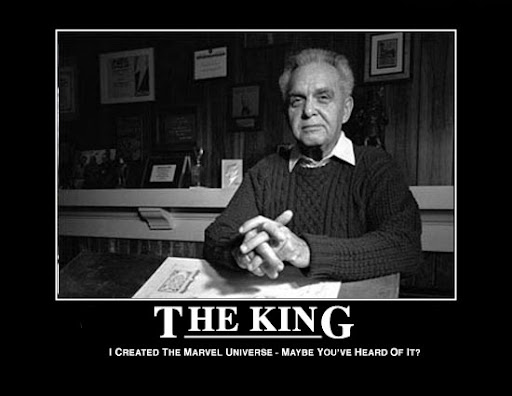
Over at Comics Alliance, an essay by Chris Sims on why the archetypes running loose in Jack Kirby New Gods can trouble our thoughts thirty years after they first appeared. "[Darkseid's] actions are geared towards conditioning people to embrace and exploit their own base hatred and fear. That's how he wins and remakes the world in his own image... devoted not to death but to Anti-Life... a slavery that masquerades as freedom by allowing its victims to give in to the dark side of humanity. [Darkseid] is a villain who exploits the small selfishness that we all see, experience, and even commit on a daily basis and shows how it all adds up to towering evil, and that makes him one of the most genuinely terrifying villains in comics."

Pursuant to an earlier conversation with friends, there's also a short list of prominent women working in comics-- my own favorites, like Amanda Conner, Gail Simone, Colleen Coover, a mention of Karen Berger's importance as an editor on Sandman-- and some I'd never heard of, like Emma Rios and Ramona Fradon. In the appendix of David Hajdu's The Ten Cent Plague, roughly half the artists who lost their jobs in the Wertham purge were women. The only one I knew as a child was Marie Severin on Dr. Strange; at least two generations have no idea the big studios used to cater to all readers, and they've never quite recovered.

Kirby and the splash page for the first episode of New Gods; Amanda Conner, one of my imaginary girlfriends, and her take on Supergirl and Power Girl; Colleen Coover on an unintended side-effect of four color printing.


Betty Lawyer Kimball


Cartoonist and muse Betty Lawyer Kimball passed away last week at the age of 97. Cartoon Brew posted a heartfelt obituary with charming photo album here.

Commonplace Book: The Music of O'Carolan, What Art Students Really Need, Bullies, the Perils of "Self Esteem" and Reckless Women

"This next one's called 'Fanny Power'. Fanny was the daughter of O'Carolan's patron and he wrote this piece for her wedding. I wanted you to hear it because I didn't want you to think there was only one perfect melody in the world."
.... Sarah was surprised to see that his eyes were moist. "She must have been very beautiful."
He looked at her. "Who?" And his voice was suddenly wary.
"Why, Fanny." Sarah sighed. "Three is magic in the old man's music, if it can move us to tears for the beauty of a woman two centuries dead."
"Ah, yes, Fanny." There was a distant look in Red's eyes and she sensed the sadness in his voice. "I suppose she was. Beautiful, that is. But beauty is in the eye of the beholder, you know; and O'Carolan was blind."
(In the Country of the Blind by Michael Flynn)


“We live in a country where a black who wants to help poor people buy insurance is regularly referred to as a Nazi, so I guess anything is possible.”
(Comment on Wonkette)


“For a student, creativity should be the last lesson. If it’s there, let it be, but for the moment learn—look—absorb—study.... A discipline achieved early on should be as automatic as breathing or talking. And the discipline of drawing is the finest. A savage two or three years is imperative. No creativity. Drawing forces you to look and an artist needs to do that more than anything short of thinking... Then give yourself a break and waste a year in total anarchy. ... Is it not possible for art schools to re-establish themselves as protectors of values? ... Purity of intention should be a guiding maxim. The moment we decide to enter an art school, we should feel that we have taken our Hippocratic oath to see it through. We are doctors of the spirit—and if an operation is necessary, then it must be performed. “ (Ralph Steadman, Comics Journal interview)


“The Chicago pol in the Oval has had to learn one of the great American truths: You’ve got to slap the bully in the face.”
(Maureen Dowd)

“Sex diarist Belle de Jour has claimed that nothing in her background had any bearing on her decision to become a prostitute. On her website her father's recent public admission that he'd slept with dozens of prostitutes during her adolescence was denied any importance. The facts were not disputed. She just doesn't want anyone thinking they impaired her ability to freely choose sexual slavery, à la Susan Street, while still calling the shots. This belief has made women reckless. Belle's assertion in one of her memoirs that she became a prostitute because she "couldn't remember the reasons not to" suggest that she has forgotten, or more likely repressed, the physical and psychological risks. Paradoxically, this generation of women is more vulnerable than any of its forbears. Women's refusal to acknowledge any weakness has made them easy prey.”
(Charlotte Raven, “How the New Feminism Went Wrong”)

“... Although it is ironic that for a guy [David Frum] who was wrong on pretty much everything and still kept his job, the one time the guy gets fired, it is because he is right.”
(Comment by “Manchu Candidate” on David Frum’s resignation from the American Enterprise Institute, at Wonkette)


“One has only to go into a prison, or at least a prison of the kind in which I used to work, to see the most revoltingly high self-esteem among a group of people (the young thugs) who had brought nothing but misery to those around them, largely because they conceived of themselves as so important that they could do no wrong. “
(Theodore Dalrymple)

Hemophilia, Comic Book Artists and Kitty Pryde

A sweet and simple fund-raiser idea: Douglas E. Sherwood of Oni Press asked a couple of dozen artists to draw his favorite X-Men character, Kitty Pryde, with the results to be auctioned on E-Bay as a fundraiser for the Oregon Hemophilia Treatment Center. I like the specificity of the idea, and that it offers something tangible-- an hour's diversion, a framed print, maybe a t-shirt-- to a relatively small pool of contributors.
Myself an O.G. X-Men reader, I'd outgrown the comic a decade before Kitty joined the team in 1980, though I came back for Grant Morrison's seven-volume run (still my favorite) and enjoyed Joss Whedon's take on the character. For me, it's all about Kitty and Lockheed, the most interesting pet/person relationship in comics. As a writer, it seems to me that Marvel is missing a bet by letting Kitty age with her readers, and not producing a series of adventures for the under twelves to be marketed to new readers, something like DC's Tiny Titans or Jeff Smith's Shazam. Call it "A Girl and Her Dragon", with the covers a parody of the "Boy and His Dog" motif. A million-dollar idea from a middle-aged man who wants to reboot Kamandi, Last Boy on Earth.

Steampunk Building


Art Deco has the Chrysler Building, but who knew that Steampunk (think of Jules Verne and a future designed with wood, brass and iron instead of plastic) has a building of its own?

These are pictures by Alan M. Pavlik of the Bradbury Building , built in Los Angeles in 1893, a history of the building at Wikipedia, and the building's history as a set for films by Charlie Jane Anders at io9.

More Death: Andrew Wyeth


What is it about the week of January 16? Now news comes that Andrew Wyeth and John Mortimer, the father of Rumpole, both died this weekend. And I'm not feeling too well myself.
Wyeth was 91 years old, a refutation to the "live fast, die young" school of art. What makes Rembrandt Rembrandt and Hokusai "the old man mad with painting" was their ability to dive down deeper and deeper towards the great mysteries. Someone asked Hokusai about old age, and he said it was frustrating because he thought he was just starting to get pretty good; another 90 years, he said, and he might accomplish something. And Wyeth was in a line of great artists: father N.C., and his children, Jamie in particular, continue to do amazing things.

My favorite Wyeths have something human in them: Tom Carpenter in "That Gentleman", the hair on the back of Helga's neck, a dog squinting in the sun, Betsy standing in the snow by an old stone tower.

But what always amazed me, leaves me gobsmacked at the technical skill, was Wyeth's ability to paint inanimate objects-- a landscape, an empty room-- and invest it with so much personality. A lace curtain, a pair of boots, even a weather vane on top of a roof has a story that stepped out of the room just a moment before. How did he do that?
I'll never know, but in an interview last year, he did leave a useful note to etch into my skin: "People only make you swerve. I won’t show anybody anything I’m working on. If they hate it, it’s a bad thing, and if they like it, it’s a bad thing. An artist has to be ingrown to be any good."

The Return of the Comic Strip: Online


Video killed the radio star, but thirty years before, Wertham's Seduction of the Innocent and the McCarthy era killed the comic book's chance to evolve into a mature medium. The comic strip as objet d'art held on in the newspaper, with the Joycean wordplay of Walt Kelly's Pogo, Hal Foster's Prince Valiant (which survives, when you can find it, under Gary Gianni and Mark Schultz) and Frank Frazetta's underpaid work-for-hire on Li'l Abner. By the 1970's, newspapers had shrunk the panel size by half, which made panoramic vistas and pen-and-ink work like that shown here next to useless.

Doonesbury was moved to the editorial page so that no innocent might trip over an idea, Peanuts was treading water and collecting royalties, and wit and craft were replaced by odious pablum.
I don't know if anyone outside fandom has noticed yet, but webcomics have been quietly building a new golden era for the comic strip, although dignified people are still embarrassed by the form. True, New York wants us to call them "graphic novels" and constipate the reader with proper MFA nightmares like Chris Ware, the kind of comics they think they should enjoy (ooh, look! art deco borders!), like those end of the year Oscar-bait films that someone said "confuse pain with art".
But Get Your War On and This Modern World captured an era as well as anything in any medium, and Alison Bechtel's alt-family strip Dykes to Watch Out For is finishing up just as the format is finding its legs. It's telling that the newly corporate Village Voice tried to kill This Modern World, and that the people in Bechtel's strip look more like my friends and family than Hi and Lois ever did-- and at their most dysfunctional, they still aren't as annoying as Cathy.
Kalamazoo artist Jane Irwin is posting her historical fiction about clockwork automatons online, before it appears between covers.
Phil and Katja Foglio's all-ages steampunk adventure Girl Genius can be read online; and sometimes I gotta go for the profane, self-referential "Sweet Monkey Jesus!" humor of Neo-Monster Island (and if you've been waiting for Godzilla to stomp the Bush administration into chutney, here's your chance to get your kaiju on).
Of the big, corporate publishers, The New York Times, of all people, has the cleanest presentation, with online comics that scroll up and down, like this strip, "Snow Dope" by Dean Haspiel. They even had sense enough to get the stick out of their butt and run La Maggie la Loca, by my ongoing favorite, Jaimie Hernandez, in the Sunday magazine, though online it's a huge, unreadable mess; wait for the trade.

The online reader developed for DC's Zuda Comics travels from left to right, meant to approximate page turning, but I find it simply annoying, and Marvel's online reader is even clumsier. The panels are either too big or too small for the screen, and whether a comic is fast or slow, the software-- not the reader-- dictates the pace at which the eye scans story and art. When even a hardened addict like myself finds it too much trouble to read your comics online, you've got issues that need resolving bigger than Joe Quesada's problems with women. The majors (in this case, Marvel and DC) need to bite the bullet, reformat their scans, and go with a presentation similar to the reader's choice, 11" by 17" scroll used by the Times and the independents.

Comics Advent Calendar by Brian Conin


It's that time of year, when Brian Cronin puts together an advent calendar for his blog Comics Should be Good. This year it features political cartoonists from Thomas Nast to Dr. Seuss (whose political work is collected in Dr.Seuss Goes to War). If you're "in love with pen and ink on paper" like I am, it's worth a click. I thought I knew Thomas Nast, but I'd never seen this drawing before; hats off for the effort to surprise jaded eyes.

Monkey Puzzle


Monkey is the great trickster hero of Asia, kin to Coyote and Odysseus, Brer Rabbit, Mouse Deer and the rest. Monkey is always wandering, bragging, grabbing at everything and never shutting up, showing off, asking questions, and getting in and out of trouble. They call him "the animal with a hundred hands" because he's always grabbing at things, like the mind that won't stay still but gets itself into unnecessary trouble: the mind, the Zen masters tell us, IS a monkey.
I made this drawing some years ago as part of a long abandoned project. The monkey bodies spell out his name. There's a big painted version in color as well, with the word MONKEY arranged vertically, a blue-green background and the monkeys in red and yellow. An art lover paid me good money for that one (now will I believe that there are unicorns), so it either hangs on some wall or in a rummage sale somewhere.
Monkey: Journey to the West is a classic Buddhist novel of Monkey's adventures traveling with a Buddhist monk in search of enlightenment, faced with 80 impossible tasks 100 chapters and demons and temptations galore-- even pissing on Buddha's hand-- and despite all his character flaws, Monkey finally achieves enlightenment, hope for the silliest.


Now I'm pleased that Jamie Hewlett (Tank Girl and the Gorillaz) has combined Monkey's adventures with the Olympics as an intro for BBC Sports. It's a connection that was hanging there waiting for someone to grab it, so I'm glad it was them and not Disney or some other corporate thief of other people's dreams. Carlo Collodi invented Pinocchio and James Barrie created Peter Pan. Felix Salten wrote Bambi and Hans Christian Anderson dreamed the Little Mermaid (with an unhappy ending) and Rudyard Kipling's "The Jungle Books" is ten times more profound than that jazz-track abomination. Walt Disney may have been the Thomas Edison of idea factories, but that's scarcely a recommendation.

Robert Grossman, Caricaturist


I've been a fan of Robert Grossman's ever since I first saw his work in The Beatles' Illustrated Lyrics: a drum majorette twirling a hammer and sickle for "Back in the U.S.S.R., perfect marriage of two opposing fantasies represented by the song.

Grossman's work shows up here and there (mostly "there", as in publications like The Nation and New York Observer), but I've always thought he belongs in the same ranks as David Levine and Drew Freidman. Now I'm happy to learn that he has a website up, and a profile in the New York Times.

Dave Stevens, 1955-2008


Dave Stevens was a wonderful artist whose influence exceeded his output, a meticulous technician who would draw and redraw (I am told by my friend Wayne) every panel until he had it right. The man had chops. I don't think I'm exagerrating to say that at least two generations of artists took his example to go back and put in the hours to learn technique. The retro-illustrations for his comic The Rocketeer -- never more than a couple of issues ever produced, because of the time he put into it-- were pored over by amateur artists. Dave Stevens taught us that it wasn't just an older generation of illustrators who possessed alchemical tricks of technique, that someone in our debased age could rediscover and surpass the illustrators of the past. I still have my tattered copy of the first Rocketeer, look over it in admiration at least once a year, and pinned on the bulletin board is a cover saved from the Jonny Quest comic "Jade, Inc."-- glamor! adventure! pluck! that sums up everything I loved about those characters.

Before anyone had ever heard of him, long before the leukemia that killed him, Dave Stevens did a wonderful thing for the scales of cosmic justice. His photo reference for those early comics was an obscure, almost forgotten pin-up girl of the 1950s named Bettie Page. Stevens' success with the image of Bettie led to his discovery that she was still alive and nearby. It was Dave Stevens who tracked her down in gratitude and curiosity-- did she know that there were fans and artists who still traded her likeness and spoke of her with affection? He protected her desire for privacy and became a surrogate grandson to Bettie Page, driving her to church and to the movies or dinner once a week.

Stevens' art brought the case of Bettie Page to the attention of Hugh Hefner, who had made a fortune from her in the Fifties, and who now, just as discreetly, arranged for lawyers to get Bettie Page some royalties for all the old Irving Klaw and Bunny Yeager photos and the thousands of Bettie images out there and her ongoing cult following. There are worse things to do with your life than to make the world a little bit safer for beauty and sweetness.

"It doesn't explain or justify. It just seems to remind me of how things are.
Picture a very swift torrent, a river rushing down between rocky walls. There is a long, shallow bar of sand and gravel that runs right down the middle of the river. It is under water. You are born and have to stand on that narrow, submerged bar, where everyone stands. The ones born before you, the ones older than you are, are upriver from you. The younger ones stand braced on the bar downriver. And the whole long bar is slowly moving down that river of time, washing away at the upstream end, and building up downstream.
"Your time, the lives of all your contemporaries, schoolmates, your loves and your adversaries, is that part of the shifting bar on which you stand. And it is crowded at first. You can see the way it thins out, upstream from you. The old ones are washed away and their bodies go swiftly by, like logs in the current. Downstream where the younger ones stand thick, you can see them flounder, lose footing, wash away. Always there is more room where you stand, but always the swift water grows deeper, and you feel the shift of the sand and the gravel under your feet, as the river wears it away. Someone looking for a safer place can nudge you off balance, and you are gone. Someone who has stood beside you for a long time gives a forlorn cry and you reach to catch their hand, but the fingertips slide away, and they are gone. There are the sounds in the rocky gorge, the roar of the water, the shifting, gritty sound of sand and gravel underfoot, the forlorn cries of despair as the nearby ones, and the ones upstream, are taken by the current. Far downstream from you are the thin, startled cries of the ones who never got planted, never got set, never quite understood the message of the torrent. Some old ones who stand on a good place, well braced, understanding currents and balance, last a long time. A Churchill, fat cigar atilt, sourly amused at his own endurance, and, in the end, indifferent to rivers and the rage of waters."


-- John D. MacDonald, "Pale Grey for Guilt"

Spyong: Jack Kirby on Jack Kirby


While obsessing about the work of Will Elder and Wally Wood, specifically their Mad parodies of the 1950's, it was a pleasure to be reminded here of Jack Kirby's ability to parody himself. I still remember a short he drew somewhere (an early FF annual?) where he drew himself squinting out from under an assortment of ever more bizarre Kirbyesque helmets. The man had an unappreciated sense of humor about his own quirks: distorted anatomy, apocalyptic force lines, grimacing minions, and all.

The God of Small Things Broken on the Wheel

Titian's Madonna of the Rabbit might be sweet and simple and pastoral: the young woman holding the baby, the child reaching for one of two domestic white rabbits, the mother's hand caressing the back of the child's head. You can almost hear them murmuring, gentle, now. The mother's hand cupping the rabbit's haunches rather than holding the scruff of its neck, an indication of trust on the rabbit's part that must have been observed from life. A shepherd in the backgrond that might be a guardian of the gentle triangle, petting a black sheep, his gaze not anxious, but dreamy and thoughtful in a place where "sheep may safely graze". Is the baby reaching, or blessing? Is the mother's hand intentionally making the Buddha's "earth touching" gesture?


That's a big part of Christmas for me, a midnight when animals can talk, a truce when soldiers from the tranches exchange cigarettes and play soccer, when the world is supposed to stop savaging children and animals. On any other day of the year, the Baby Jesus, the ox and the donkey would be "collateral damage", swollen at the side of the road somewhere-- just look at the statistics on civilians from Our Monkey Emperor's invasion of Iraq, or if, as Stalin believed, "statistics" don't count, Brian K. Vaughan's Pride of Baghdad. For one night, the Roman Saturnalia is turned into a celebration of the most vulnerable fragments of suffering humanity.

Titian's meditation goes deeper; the young girl attending the baby is Saint Catherine of Alexandria, who lived almost 300 years later. Artists called these kinds of paintings "sacred conversations", sacra conversazione, figures from different periods brought together to carry some symbolic message.

A ghost of horror stalks the loving scene, because Catherine symbolized the torture and cruelty imposed on the small things of the world. When she was eighteen, she was condemned to be broken on the wheel: on the "Catherine wheel", the victim is bound to the spokes and the wheel is turned with a rod shoved in between the spoke and the all too human limb. Arms and legs can be broken many times this way, with the victim still conscious; sometimes broken so many times that the torturers could wrap your arms and legs around the spokes like a piece of string. According to the saint's legend, Catherine touched the wheel, and the wheel itself broke into pieces. Robbed of their fun, they beheaded her instead. Of the rabbits, and the flowers (artists were very specific about the symbolism of plants in Titian's day), the shepherd and the black sheep, I'm fairly ignorant, except as indications of gentleness and trust. That the world contains such cruelty in juxtaposition with beauty and tenderness is one of those mysteries of the "philosophia perennis" that I keep trying to understand with Christian and ecumenical metaphors, but there's real blood mixed in with the wine.

So Merry Christmas. Sorry, cosmos, that we've been such vicious, murderous primates all year, but we promise to do better next year. That was Christmas Eve, of course, and we made those promises and toast while we were drunk on sentiment, sentiment being defined here as emotions that you don't really mean, as sincere as Jove's perjuries. Christmas Day, people were back to taunting a captive Siberian tiger, dangling a leg over its prison and then affecting surprise when the tiger climbed up that leg, killed one of them and mauled two more, doing what tigers do. What would William Blake make of this? Word comes as I finish this post of the death of Benazir Bhutto. Let us continue this talent for killing our best and brightest on the altar of a murderous God, and then see what we've accomplished. Our friend Michael in Colorado sends his usual cynical Christmas card: Merry Fucking Christmas. Not nearly cynical enough.

What I'm Reading: Clive James Cultural Amnesia


Came back Sunday night from the World Fantasy Convention in Saratoga Springs, much too over-stimulated and inspired by many meetings to give a coherant account of the experience: I saw this one, heard that one, developed a little crush on another, bumped into this one or saw such-and-so a mighty one from a distance drinking overpriced scotch in the hotel bar. I expect the anecdotes and insights will come dribbling out bit by bit as I have time to process them.

Here is one such: the comic book artist Matthew Dow Smith and I had an informal gripe session about why some "superstar" artists who shall remain nameless turn into shitheels. I compared notes from my own experience watching medieval graduate students evolve into professors and my own brief encounters with the famous (in my experience, famous persons most deserving of reknown have been the least pretentious, and showed the most curiosity about the world around them.) It costs so little-- seconds really-- to show noblesse oblige to someone farther down the ladder than yourself, and pays off down the road by spreading good will. He was interested in my ideas about the "poison mentor", the false friend and father figure who uses the apprentice instead of teaching them, a type who causes at least as much damage in society as the overly-analyzed "devouring mother".

All this is prologue to saying that Cultural Amnesia is a very generous book, by which I mean Mr. James has crammed so much good thought and bonhomie into this collection, you can browse just one or two of the essays and come away with passages that will keep your wheels turning for a week. Cultural Amnesia is a collection of original essays concerning the violence of the past century, a handful of people who did their best to stave off the darkness, and favorite writers off Mr. James' shelves. I plan on giving it to my more thoughtful former students as a friendly introduction to the larger world of humanistic thought and why it matters, as generous a gift as the Durants' Story of Civilization. A long time ago, a casual recommendation by a professor when I was a teen led me to Paul Fussell's The Great War and Modern Memory and the works of Joseph Campbell, and when I came across them years later, took me miles from where I started. Cultural Amnesia is that kind of resource. This is how we are nutured by those who have gone before, rather than exploited.


Slate magazine has a selection of some of the essays here, enough perhaps to make you buy a copy and keep it on your shelf for reading with your morning coffee. I got mine as a birthday present and read it through the summer, starting with characters I was already familiar with, and then more slowly from A-Z. Someone in the old Whole Earth News recommended this approach when reading new reference books: start by reading the entries on a subject you already know something about, and if it's good, start working your way in deeper.

It's like a really good buffet from a generous host. This morning I dipped into "Hegel" and "Keats" and found enough in there to have me muttering to myself the rest of the day. Here are a few bites from James' essay on Adolf Hitler:

"Some of the last aphorisms written by the great Robert Musil were devoted to summarizing the pathogenic nature of Hitler. Beautifully crafted statements, they had no effect on Hitler whatsoever.... a sufficient concentration of violence could neutralize any amount of culture, no matter how widely diffused."

"It may seem unfair to condemn intellectuals who conspire to undermine vulgar democracy in favor of a refined dream for failing to foresee the subsequent nightmare. And Moeller was only one among many. But there were too many: That was the point. Too many well- read men combined to prepare the way for a pitiless hoodlum who despised them, and they even came to value him for being a hoodlum: for lacking their scruples, for being a drum of nature."

If that doesn't take the piss out of the neo-conservative "intellectuals", the Podhoretzs, Kristols and Abrams who have enabled Bush the past several years, who are now foisting Rudolph Guliani on us, nothing will-- their self-love is adamantine.

Theresa Duncan and Jeremy Blake and Descents into Darkness


I found Theresa Duncan's blog of cultural criticism, The Wit of the Staircase while doing a search for the spelling of the phrase esprit d'escalier, "the wisdom of the staircase", meaning the things you wish you'd said after an argument, after slamming the door, on your way down the stairs or a couple of blocks down the street. Being cursed with fierce memory means that I have to make a conscious decision to pack away and dismiss other's (minor) faults and my own (major) sins, or else carry them around with me all day and night. This makes a phrase that describes regret more sympathetically than "coulda shoulda woulda" a useful thing to have.

Now I find out from New York magazine that Theresa Duncan killed herself, that her lover Jeremy Blake followed a week after. At first I was just going to move her link next to Molly Ivins', in memorium, still worth reading, with regrets for another intelligent stranger that shouldn't be dead, but is. People that make the world a better place in small or large ways keep dropping like flies, while shitheels go on crawling like roaches, leaking juices and polluting the world for days, even after being squashed. It must be a part of that plan for the world that says at any given time there are only thirty six tzadikkum, just and righteous people, who hold the world together with masking tape and mud and never know the value of their labor. Poisonous assholes, great and small, never get tired, while nature apparently puts a load limit on virtue.

According to the article, Duncan had been frustrated in her efforts to become an independent filmaker, which if you'd asked me, I coulda told you, Henry Slesar's description of "success in Hollywood" being enough for me. Add to that what Jim Harrison said: that a successful career in the arts faces about the same odds as an unlucky combat platoon, or a retirement community in Florida, with a few survivors breaking through and then attributing their success to inherent virtue and hard work instead of the vagaries of fate. Garrison Keillor wisely sneered at religious pundits who talk about Faith without ever really having to dig for it: "there's no one knows more about faith than an undiscovered artist." There's no one waiting for your next outburst, you have to feel energized enough to do the work, but not so energized you don't want to stay in your seat, you have to and believe that a project's worth finishing even if no one ever sees it, its value to the world roughly less than that fallen sumac tree that no one heard.

As connected as Theresa Duncan was in New York, even after her big break when her animated film The History of Glamour got national attention, it just wasn't enough to get a film made. I knew a guy who had the "option" picked up for a comedy script he wrote, thousands of dollars-- but six years later he was still waiting tables. Filmmaking, if you'da ast me (which you didn't), is art-by-committee: you need a lot of hands and a lot of money, and all kinds of trouble I don't need-- whereas when the power was out in Kalamazoo for more than three days, we managed somehow with a pencil and a flashlight. Theresa Duncan had at least one editor telling her to give up on film for now, and move into prose full time... but it tasked her. Zero Mostel, after he was blacklisted, just said Screw It and went on painting until the wheel turned around again. Worried about that day the Right finally transforms the United States into Chile, and we're all locked up with three hots and a cot in Guantanamo...? I'm the guy muttering, "Finally, I can get some work done."

Apparently for Duncan and Blake, their frustrations started turning into conspiracy theories about Scientologists who didn't want them to succeed. The natural process of finding out Who Your True Friends Are degenerated into making lists of Who Was Loyal and Who Was Part of the Conspiracy. No one can follow from the outside all the dark and lonely convolutions that lead a person to suicide, and according to New York, no one knows exactly when this beautiful couple drove off the main road until they were lost from sight.

Yeah, yeah, I was young and beautiful and doomed once, too. And yet, and yet, as I read on, I was surprised to find out that Theresa Duncan was a sister under the skin, another smart and literate kid from a small town (Lapeer, in her case) in Michigan, another talented writer unable to break into the world dominated by million dollar contracts for celebrity authors, which, in case you haven't figured out, means more than a thousand talented writers who will never be published at all because the corporation blew the budget on Sonnee Tufts' tell-all. She didn't want to be a fly-over, when silly people with much less to say are lionized in the cultural centers of New York and Los Angeles. We are mute, emasculated, unheard, drowned out by the shouting from Madison Avenue until we find some way to break a crack in the rock so the living water can flow through to bring water to the owls and the dragons. Add in chemical, genetic and situational depression, suicidal impulses, the frustration of having one eye in a kingdom of the blind (for example, I see from the papers that Norman Finkelstein was denied tenure by Depaul for getting into a pissing match with the Israeli lobby, his apparent sin being speaking truth to someone who buys ink by the barrellful). Add in the chronic anguish that can drive someone to a hasty decision simply to escape, baby, my credentials are on file. These are the things that Hamlet puts on his list of daily insults to the brain, next to the law's delay and the proud man's contumely.

There's a conversation in Long Day's Journey into Night between the compromised father and the ambitious son:
James: Yes, there's the makings of a poet in you all right
Edmund: The makings of a poet. I'm like a bum who asks for a cigarette: he doesn’t have the makings, he's only got the habit. I could never touch what I tried to tell you just now. I just stammered.

I've been luckier than poor Theresa Duncan (would she have chased those pills with whiskey if she'd known Jeremy Blake would follow her in? Was it an poorly thought-out impulse?) I was lucky enough to have a friend nearby who could warn me when I started to sound like a danger to myself. Non-depressives sometimes forget the nature of the disease: when you're down in a hole (hence, "depression") the only reality you can see is the side of the hole, with the patch of sunlight up above being something reserved for "winners" instead of "losers" like yourself. Reality is filtered through a delusion that even the most despicable human beings-- telemarketers, torturers, dog fight promoters-- are winners in the eyes of the world, while the most noble depressive is unworthy of life. The depressive appears lucid, even cheerful-- how many of us are full of jokes!-- but when those chemicals are acting up, there's a distortion of subjective reality that would make a schizophrenic call us crazy.

So include a little prayer for Thersa Duncan and Jeremy Blake and sad people everywhere, even, reportedly, the actor Owen Wilson, and for all the wayfarers looking for the soul of the world, the hobos Kerouac described as wearing two watches, the sun on one wrist and the moon on the other. Some of the very best people are exiles from the culture at large; you'll eat canned beans with the likes of Diogenes and Chu Yuan. But it's like all those times when you were maybe too drunk to drive but you made it home anyway, or went home with the wrong person but you managed not to drive your life into a ditch. If making a success as an artist requires the happiest of chances, so does being rescued from suicide, encountering this person instead of that, turning left instead of right on some dark corner on one dark night. I can remember a night when a photograph of Isak Dinesen's ancient face saved my life: I said, "she looks like I feel", and with nothing left but curiosity, I went home and read the only story by Dinesen I had in the house, and by chance it was a tale that had a particular blessing for me, and so I was saved. I've been rescued too many times by the luck of floating branches in the rushing current to ever sneer at someone else's nemesis.

Smell My Undead Finger

Art from an ad for Anita Blake, Vampire Hunter #8. Okay, if you're going to have a Buffy knockoff crossed with Patricia Cornwell's Scarpetta but with lots more soft porn with vampires named "Jean Claude", and your dark brooding paranormanl romance character dressed like a Japanese elf in a gay disco, do you really want him posed like he's sniffing his fingers?

CASSIOPEIA, DIRTY MUDFLAP GIRL IN THE SKY

I may have uncovered the archetype beneath badly drawn female anatomy, and no, I don't mean the Venus of Willendorf.

News from Perseus, which seems to be a busy part of the sky this time of year. The scientists who located the first of almost 250 planets known to be outside our solar system have announced a new planet that almost matches ours in its distance from its sun, with a year of 360 days. Bad news is, the star it circles is a Red Giant that's eaten up the equivalent orbits of Mercury and Venus and long since baked away any water or life that might have been there.

My friends and relatives who live away from city lights are used to me pestering them this time of year, because August 12 is when I start lurking in their back yards to watch for the Perseids, a thick meteor shower that seems to come out of that part of the sky. The light circled in red above, NGC1275 or Perseus A, is the source of a strong radio signal of unknown origin. At these distances there's no connection, but fun for a writer to play with-- shades of Arthur C. Clarke's "The Star".

The winking eye of the gorgon's head in Perseus' hand, Algol, was called Ras Al Ghul by the medieval Arabs, "head of the demon" (and gave its name to a Batman villain). It's the only binary star we can see with the naked eye, that darkens every couple of days when the smaller of the two stars passes behind its companion.

I can only reliably find about five constellations without a map and both hands. I usually find Perseus by first looking for the W or upside down M in the sky. The professionals call it Cassiopeia, the queen on her throne, but my wife and her sister have renamed her "Dirty Mud Flap Girl", as you can see from the incredibly expensive graphic I've provided here.


My friend Wayne Allen Sallee plans on renaming the cities of America when he's the last survivor of the next great plague. The novelist Jim Harrison wants to rename any birds of America that labor under inadequate or unpoetic names-- "The Beige Dolorosa", one of three novellas in Julip, describes the plan. Bridget and Colleen discovered the Dirty Mud Flap as girls, during long nights on Grandma Olga's dock, and in the weird archetypal nature of these metaphors, it's an appropriate nickname.

Cassiopeia was the beautiful queen of Ethiopia, so vain that she boasted she was as beautiful as the fifty daughters of the Old Man of the Sea. Hence the connection with our chrome avatar of badly drawn female pulchritude; did Michael Turner design that thing while he was still in high school?

Cassiopeia was punished by a sea monster that ravaged the coast of Ethiopia, appeased only by sacrificing maidens. What is it with these monsters and their treasure and their maidens? They don't know what to do with either, like an obtuse millionaire with a trophy wife. They ran through all the virgins 'til there weren't any left, except for the queen's daughter Andromeda, the girl chained to the two starry pillars to the lower right of Perseus. Perseus rescued Andromeda, and thereby hangs a tale and a plot point in Clash of the Titans, by which I mean the Harryhausen film and not the legend of Power Girl's breasts.