Showing posts with label plus ça change. Show all posts

plus ça change, plus c'est la même chose.


"And people altered, at their pleasure, the customary significance of words to suit their deeds: irrational daring came to be considered the "manly courage of one loyal to his party"; prudent delay was thought a fair-seeming cowardice; a moderate attitude was deemed a mere shield for lack of virility, and a reasoned understanding with regard to all sides of an issue meant that one was indolent and of no use for anything. Rash enthusiasm for one's cause was deemed the part of a true man; to attempt to employ reason in plotting a safe course of action, a specious excuse for desertion."

Thucydides on the Peloponessean War, 431 BC- 404 BC
(thanks to I Cite for noticing this first)

Generational Touchstones: "Which Side Are You On"?


Elegant Wits and Grand Horizontals, an entertaining book by Cornelia Otis Skinner about "La Belle Epoque" of Paris in the 1890s, notes that duels in that era had been comic opera affairs, with duels fought over journalists' reputations, whether Sarah Bernhardt was slender or skeletal or whether Hamlet should be blonde or brunette. It was the Dreyfuss Affair, when Captain Alfred Dreyfuss was falsely accused of treason and sentenced to life on Devil's Island that "split the nation into two warring camps breaking up lifelong friendships and causing bitter family rifts that were hardly healed before the outbreak of the First World War." The split went far beyond whether Dreyfuss was innocent or guilty, beyond anti-Semitism and chauvinism and the divisions of "left" and "right" in France and extended into personal awareness of where one stood in the world.

In this country, there were defining splits between those who volunteered to fight the fascists in Spain and those who called them "prematurely anti-fascist" in the 1950s, right-wing code for a Communist sympathizer. The left itself split over Stalin's perversion of Marxism and the non-aggression pact between the Soviets and the Nazis, proving that conservatives don't have a monopoly on turning a blind eye to atrocity.

My own generation, lucky, feckless bastards, too young for Vietnam and too old for Iraq, had no greater moral choice than whether they dropped acid during their cousin's wedding in the seventies or embraced cocaine and designer jeans in the eighties, whether they voted for Reagan or thought Oliver North should be in jail. Of the great temptations of easy sex or recreational drugs and our last two presidents, one was a poor boy who chased tail and didn't inhale, and the other a rich boy who spent his salad years getting high. I leave it to the reader which pursuit was more destructive of the body politic.

I suspect that the current culture war might one day be divided between those who embrace advertising and consumerism, and the wars for oil, exploitation of labor and media manipulation that make that world view possible, and those who still dream of making a better world in empirical fact and not just rhetoric. In the swirl and confusion it is difficult to articulate these divisions, but we know by instinct the real turtle and the mock.

Huxley's Brave New World, with its masses directed by "feelies" and "soma", may have been even nearer the mark than Orwell. Call it the difference between those who drink the Kool-aid willingly and those who can take it or leave it alone. Which side are you on?

Turdblossom, Meet the Original "Shit in a Silk Stocking"


Whenever I am tempted to despair at the worldly success of men like Karl Rove, I shall remind myself that President Bush's beloved "Turdblossom" is only at the top of the heap for a few months more, 657 days at this counting. Thoreau tells us to "read not the times, but the eternities", and a look at the career of the 19th century diplomat Talleyrand shows us that the Bush minions are mere amateurs, and failed amateurs at that, when it comes to kissing up to power, squeezing out the profits, then dropping your patron like a used wrapper and ducking out the back door a moment before the cops arrive. An excellent profile of Talleyrand here at The New Criterion inspired these reflections.

Rove is despised by two-thirds of the country, and hangs on to power only by the indulgence of his boss and staying a step ahead of the hounds. Talleyrand, by comparison, kept the mass of men bamboozled as to his true motives, and even on the occasions when he had to skip town, never missed a meal or a paycheck-- then switched sides and was back in business with the same people who'd been calling for his head.

Napoleon called him "shit in a silk stocking", which outdoes "Turdblossom" as a lasting sobriquet. Talleyrand could take a bite out of your donut and be wiping the powdered sugar from his lips while asking with a straight face, "Donut? What donut?"

He did get off some good lines about power, politics and human nature:

"War is too serious to be left to military men."

"They [the aristocracy] remember everything and learn nothing."


Apt to our purpose today, "I am more afraid of an army of 100 sheep led by a lion than an army of 100 lions led by a sheep."

and out-Roving Rove, “Since the masses are always eager to believe something, for their benefit nothing is so easy to arrange as facts.”

... But never forget he was a shitheel, through and through, who got a lot of other people killed and profited enormously to the end of his days. He died in bed aged eighty-three, still collecting paychecks from both sides. Like Meyer Lansky, Talleyrand was a successful gangster, unlike the flashier failures like Capone and Napoleon, who both made headlines but died in prison with the clap.

ALBERT SPEER IN UGANDA


Went to see "The Last King of Scotland", an excellent, horrific film with real monsters inside. There's been some confusion and quibbling about the filmmakers' statement that novel and film are "based on real people and real events". Let me offer a clarification: the crimes, the criminals and the victims shown in the film are all true. The storytellers have inserted a character, a Scottish doctor played by James McAvoy, to serve as eyewitness and as a exemplar of what happens when you stand too close to The Big Bad and you think it's all a game.

All through the first part of the film, as the doctor lets himself be flattered and entertained into moving in with Idi Amin, I kept thinking of Albert Speer, Hitler's handsome young architect and Minister of Armaments, who later wrote an important memoir called Inside the Third Reich. That book tells us "it is hard to recognize the Devil when he's standing by your shoulder," and the psychology of McAvoy's fictional character is certainly plausible. When I became friends with a elderly German engineer who had been a card carrying member of the Luftwaffe in World War II, he told me that Speer's book came closest to capturing his own experience: he was young and amoral, he had an freshly minted engineering degree but no job, and here came this man offering good pay and an unlimited budget, and lots of interesting little problems to solve...

It's only fair to make the point that our culture really doesn't believe something happened unless it happens to one of us. There's something metafictional about our generation watching a story about a character who thinks this is all one big adventure, that nothing matters unless it matters to him, but never mind. Pursue that route too far, and you start blaming Ishmael for surviving "Moby Dick". If he'd REALLY been committed, he'd have died with the rest of them! ... But then who would live to tell the stories and bear witness?

Gillian Anderson, in a small role as a mission nurse, is the one who first asks the doctor if he's Real or not, and warns him that life isn't a game, that the charismatic Amin might not be a trustworthy playmate. She keeps her integrity, traveling with the wounded and the refugees, while the Scottish doctor runs off to play. When she reappears, it's as a sad face through a bus window, looking back at a small man trapped in Hell.

Kerry Washington, as Amin's doomed wife Kay, is the lonely woman who makes the mistake of trusting the feckless Scot. Kay's death is as it was in the film: Kay was murdered by Amin, and her dismembered corpse displayed in a grotesque pose for her children to see, so that Amin could shout at them about what a bad woman their mother was. The only fictional character in this scene, the Scottish doctor, has the good graces to vomit. He is the audience's representative, standing witness to what this good and beautiful woman was before the monsters turned her beauty into garbage. The explicit nature of this scene, and the children's solemn stare, ought to shame the millionaires who gave civilization the slasher film.

In a moment before he takes Kay as a lover, the swinging doctor says "Fuck it" and hungrily kisses her in spite of the danger to her and to himself. This is the battle cry of our generation who came of age in the era of Reagan and Thatcher. They inhaled their cocaine and made the dealer's life a romance, knowing full well that the high traveled north in the stomach of a campesino, but Fuck the Third World and Chile too, as long those dirty Communists are kept in line and we get our raw materials. Fuck the Rust Belt and Fuck the Cambodians and the Afghans too, who cares what kind of monsters rule over them so long as we stick a finger in Russia's eye-- and then our entire generation of whores had the gall to express surprise when the Third World flew planes into our towers. Is anyone really surprised that Idi Amin lived out his comfortable exile in Saudi Arabia, another wealthy nation that has consistently sheltered serpents in its bosom? Or that no industrial country has had the backbone to forswear the Saudi royals? Perhaps the royal family has embraced our American value of sponsoring dangerous people for so long as they pick on someone else, anyone else but me.

SAMUEL JOHNSON on HENRY KISSINGER

... So I'm researching Henry Kissinger for a non-fiction comic on the Middle East-- specifically Kissinger's comment, after inciting the Kurds to rebel against Iraq and then leaving them undefended against Saddam Hussein, "Covert action should not be confused with missionary work."
... and I stumble across this by Dr. Johnson: "Integrity without knowledge is weak and useless, and knowledge without integrity is dangerous and dreadful."

Why is Henry Kissinger considered a deep thinker? Because everyone says so. Why is his supposed intelligence (to paraphrase) "respected by friends and foes alike"? Because everyone says so.

I put it to you that a diplomat who leaves almost a million people dead in his wake is not a successful diplomat, but a master of public relations and image enhancement.

But then, I'm not as smart as Dr. Kissinger, and consequently have no right to criticize or question. How do I know this? Everyone says so. It's a common assumption.

Arguably, the deluded naked emperor was better educated and more experienced than the rude child who pointed and jeered at the pimples on the emperor's pasty ass. Everyone says so. It's a common assumption. I'd just like someone to do the math some day comparing the number of lives Kissinger saved while making the world safe for American interests, and the numbers killed directly or indirectly by his arrogant decisions. Kind of like a Nobel Prize earned run average.

SHAKESPEARE ON OUR CURRENT WAR LEADERS

Here is Harry Percy, known as "Hotspur", defending himself to Henry IV against a charge of insubordination.

HOTSPUR

My liege, I did deny no prisoners.

But I remember, when the fight was done,
When I was dry with rage and extreme toil,
Breathless and faint, leaning upon my sword--

Came there a certain lord, neat, and trimly dress'd,
Fresh as a bridegroom; and his chin new reap'd
Show'd like a stubble-land at harvest-home;

He was perfumed like a milliner;
And 'twixt his finger and his thumb he held
A pouncet-box, which ever and anon
He gave his nose and took't away again;
Who therewith angry, when it next came there,
Took it in snuff; and still he smiled and talk'd,

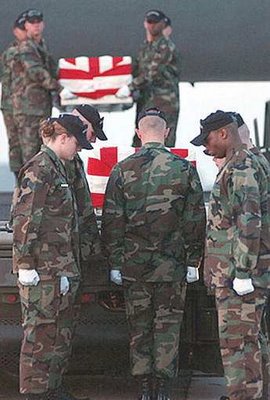
And as the soldiers bore dead bodies by,
He call'd them untaught knaves, unmannerly,
To bring a slovenly unhandsome corse
Betwixt the wind and his nobility.

With many holiday and lady terms
He question'd me; amongst the rest, demanded
My prisoners in your majesty's behalf.
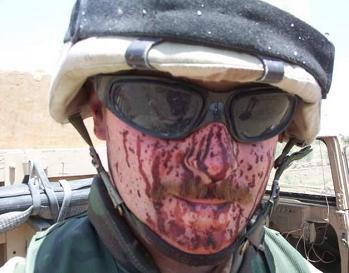
I then, all smarting, with my wounds being cold,
To be so pester'd with a popinjay,
Out of my grief and my impatience,
Answer'd neglectingly I know not what,
He should or he should not; for he made me mad
To see him shine so brisk and smell so sweet
And talk so like a waiting-gentlewoman
Of guns and drums and wounds,--God save the mark!--

And telling me the sovereign'st thing on earth
Was parmaceti for an inward bruise;
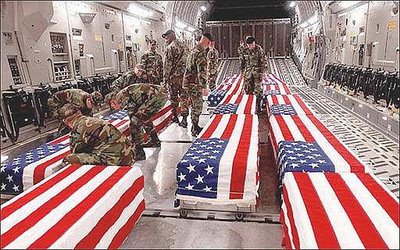
And that it was great pity, so it was,
This villanous salt-petre should be digg'd
Out of the bowels of the harmless earth,
Which many a good tall fellow had destroy'd
So cowardly; and but for these vile guns,
He would himself have been a soldier!


This bald, unjointed chat of his, my lord,
I answer'd indirectly, as I said;
And I beseech you, let not his report
Come current for an accusation
Betwixt my love and your high majesty.

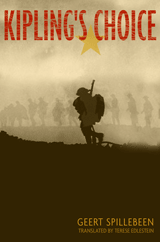
"Mostly he cries for his parents and his home, and wonders what has happened, what will happen, to him."

From Colleen Mondor's review of "Kipling's Choice" by Geert Spillebeen:
"As he suffers great pain and loneliness in the time before his death, John does not reflect philosophically upon his life or his loss of it. Mostly he cries for his parents and his home, and wonders what has happened, what will happen, to him. It is one of the more realistic and emotional portrayals of a death that I have read and shows far better than any movie just what dying in a war is all about. It is worth noting that in the Battle of Loos the British army sent their men out to be little more than cannon fodder. They marched them into German guns, hoping they would overwhelm their defenses; they were wrong. The same thing happened in Gettysburg and Fredericksburg in the U.S. Civil War; the same thing happened in Gallipoli also in 1915. There are a hundred similar battles I could list here, give me time and it could be a thousand. And all of the soldiers are dead just like John Kipling, and all of them died just like he did. And it is never pretty, and it is never glorious. Death never is any of those things and if you think it will be different in battle then you are a dreamer; we are all dreamers."